The phrase Lord’s Supper meaning raises several important questions: Why did Jesus tell his disciples that the bread was his body and the cup was the new covenant in his blood? Is Communion a memorial of his death, a sacrament through which Christ is truly present, or both? And why did the apostle Paul rebuke the Corinthian church for the way its members celebrated this meal?
The Lord’s Supper is rooted in Jesus’ final meal with his disciples before his crucifixion. The Gospels connect it with his impending death, while Paul’s First Letter to the Corinthians explains its significance for Christian worship and community life. Together, these passages show that the celebration involves remembrance, participation in Christ, the covenant established through his death, and the unity of believers.
Understanding the biblical meaning of Communion requires more than identifying what the bread and cup represent. We must consider the historical setting of the Last Supper, the Jewish traditions that shaped it, the divisions in the Corinthian church, and the original Greek terms that help explain Paul’s teaching. We must also distinguish what Scripture explicitly says from the different theological conclusions Christians have drawn from it.
Lord’s Supper meaning: What Do the Biblical Accounts Say About Its Institution?
The Last Supper in Matthew 26:17-30, Mark 14:12-26, and Luke 22:7-23
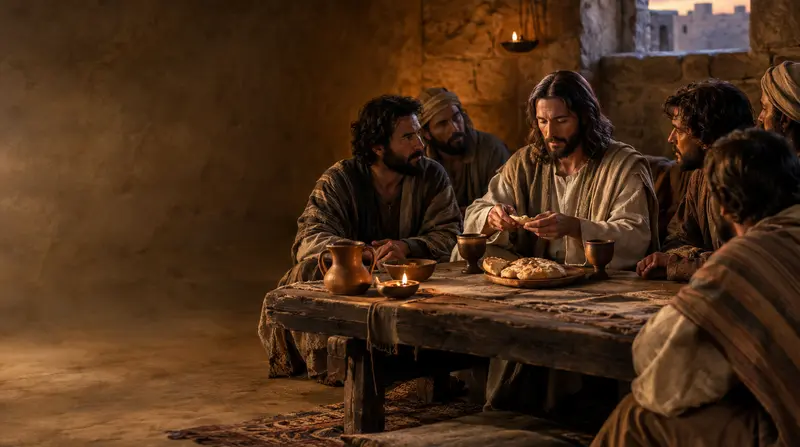
Matthew, Mark, and Luke each describe Jesus sharing a final meal with his disciples shortly before his arrest and crucifixion. These accounts are commonly called the Synoptic Gospels because they share substantial similarities in their presentation of Jesus’ life and ministry. All three connect the meal with Jesus’ approaching death and record his words concerning the bread and the cup.
In Matthew 26:17-30, Jesus identifies the bread with his body and the cup with his blood of the covenant, poured out for the forgiveness of sins. Mark 14:12-26 similarly connects the bread and cup with his body and covenant blood. Luke 22:7-23 emphasizes the instruction to repeat the meal in remembrance of Jesus, linking the celebration to his impending suffering.
These details reveal that Jesus was not merely sharing a farewell dinner. He interpreted his approaching death and gave his disciples a practice through which they would continue to remember him. The meal became a distinctive expression of their relationship with him and of their understanding of his self-giving.
John’s Gospel presents the final evening differently. John 13-17 recounts the footwashing, Jesus’ teaching about love, his promises concerning the Holy Spirit, and his final prayers for his disciples. John does not include the same institutional account found in the Synoptic Gospels. Nevertheless, John 6, with its teaching about the bread of life, has played an important role in Christian discussions about Eucharistic theology.
Paul’s Testimony in 1 Corinthians 11:23-26 and Its Importance for Understanding the Early Christian Celebration
Paul’s account in 1 Corinthians 11:23-26 is especially important because it is the earliest surviving written account of the institution of the Lord’s Supper in the New Testament. Paul was addressing a congregation in Corinth whose gatherings had become occasions for division rather than mutual fellowship. He recalls the tradition he had received and passed on to the church to correct their behavior.
Paul describes Jesus taking bread, giving thanks, breaking it, and identifying it with his body. He then describes the cup as the new covenant in Jesus’ blood. The apostle concludes by explaining that the repeated eating of the bread and drinking of the cup proclaim the Lord’s death until he comes.
The language of receiving and passing on tradition indicates that Paul was transmitting an established account rather than inventing a new ceremony. Although the passage does not explain every detail of how the tradition reached him, it demonstrates that the early Christian celebration was closely connected to Jesus’ final meal and the meaning of his death.
The passage also shows why theology and conduct cannot be separated. Paul invokes Jesus’ actions precisely because the Corinthians’ behavior contradicts the purpose of their gathering. A meal intended to remember Christ’s self-giving cannot be celebrated faithfully while participants humiliate other members of the church.
Read the complete passage in 1 Corinthians 11:17-34 in the King James Version to see how Paul’s account of the institution is connected to his rebuke of the congregation.
Similarities and Differences Between Paul’s Account and the Synoptic Gospels
Paul and the Synoptic Gospels agree on the essential pattern: Jesus takes bread and a cup, associates them with his death, and establishes a practice that his followers are to repeat. Remembering Christ is therefore not simply an individual’s private recollection. It is expressed through a shared action that the community receives and continues.
The accounts also differ in their wording, narrative details, and emphasis. The Gospels place the meal within the story of Jesus’ final night and connect it with Passover. Paul focuses on the celebration as a practice of the local congregation and draws out its implications for Christian behavior. These different emphases do not mean that the sources must be identical in every detail to communicate a common tradition.
A further question concerns chronology. The Synoptic Gospels place the meal in a Passover setting, while John’s narrative presents the timing of Jesus’ death in relation to the preparation for Passover. Scholars have proposed different explanations involving chronology, calendars, and narrative emphasis. The precise relationship remains debated, so responsible interpretation should acknowledge the difference without assuming that every proposed explanation has been established.
Comparing the accounts carefully helps readers recognize both their shared testimony and their distinctive purposes. Rather than forcing every Gospel to follow precisely the same narrative arrangement, interpreters should examine what each author emphasizes and how those emphases contribute to the broader presentation of Jesus’ death.
The Bread, the Cup, Christ’s Body, and the Blood of the Covenant
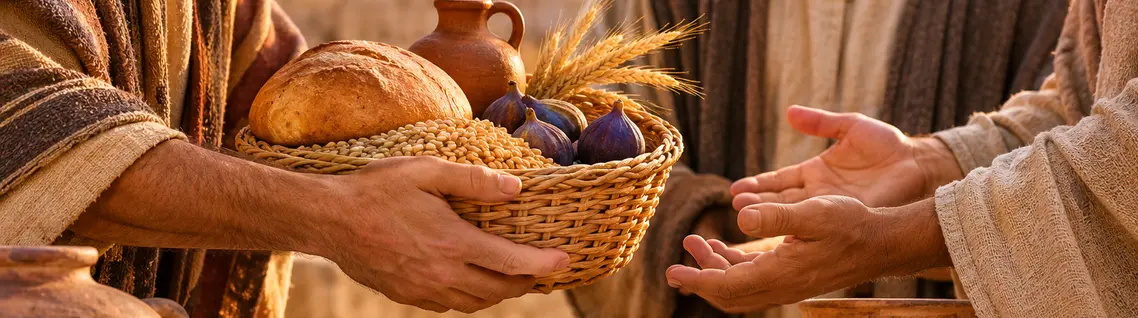
The bread and the cup are the visible elements of the celebration, but Jesus himself and his approaching death are its central concerns. By identifying the bread with his body and the cup with his blood, Jesus gives the meal a meaning rooted in his self-giving. The elements are not presented as ordinary food without theological significance; they are associated with the event that his followers are to remember.
The language of covenant blood recalls Exodus 24:8, where Moses connects sacrificial blood with the covenant established between God and Israel. In Matthew’s account, Jesus speaks of his blood being poured out for the forgiveness of sins. This language places his death within the biblical story of God’s relationship with his people while emphasizing the distinctive significance that the Gospel assigns to Jesus’ sacrifice.
The cup is therefore more than an incidental part of the meal, just as the bread is more than a reminder of ordinary food. Both are connected to Jesus’ interpretation of his death. Christians disagree about the precise sacramental relationship between Christ and the elements, but the biblical accounts place his person and work at the center of the celebration.
What Was the Historical, Cultural, and Literary Context of the Lord’s Supper?
The Corinthian Church and the Divisions Behind Paul’s Rebuke in 1 Corinthians 11:17-34
Corinth was an important city in the Roman world, with commercial activity and marked differences in wealth and social status. The Christian congregation included people who did not necessarily share the same economic resources or social standing. Paul’s letters indicate that divisions and competition were recurring problems in this community.
In 1 Corinthians 11:17-34, these problems appear during the church’s communal meal. Paul reports that some participants went ahead with their own food, leaving others hungry, while some became drunk. He asks whether those who have plenty are showing contempt for the church and humiliating those who have nothing.
This is not simply a complaint about poor manners. The gathering was supposed to express fellowship in Christ, yet the participants were reproducing patterns of exclusion. Those who had greater access to food were enjoying the meal while others were deprived of its benefits. Their conduct contradicted the unity that the bread and cup were intended to express.
Academic studies have highlighted this social dimension. David A. Steinbrenner’s article, “The Lord’s Supper? When Eating and Dining Become Determinative in 1 Corinthians 11:17–34”, examines how unequal treatment based on socioeconomic status contributed to division in Corinth. Such research supports reading Paul’s rebuke in its communal setting rather than reducing the passage to a discussion of individual feelings alone.
Jewish Communal Meals and the Meaning of Sharing a Table
Meals had important religious and social functions in Jewish life. Sharing food could express hospitality, belonging, gratitude to God, and fellowship among participants. Certain meals were also connected to religious observances and the remembrance of God’s actions in Israel’s history.
The Last Supper must be understood within this cultural setting. Jesus uses familiar actions associated with taking, blessing, and sharing food, but gives the bread and cup a distinctive reference to himself and his death. The Jewish background helps explain the significance of his actions without removing the particular meaning assigned to them in the Gospel narratives.
Early Christian gatherings could include communal eating alongside practices of prayer, teaching, and remembrance. Acts 2:42 describes believers devoting themselves to fellowship, the breaking of bread, and prayers. This passage provides evidence of the importance of shared meals in early Christian life, although it does not establish that every community followed precisely the same ritual arrangement.
The Relationship Between Passover, Exodus 12, and the Memory of Deliverance
Exodus 12 describes the Passover meal within the story of Israel’s deliverance from slavery in Egypt. The instructions concerning the lamb, its blood, unleavened bread, and the remembrance of the event gave the meal a central role in preserving Israel’s identity. Passover was not simply an occasion to recall an old story; it was a communal observance grounded in God’s deliverance of his people.
The Synoptic Gospels place Jesus’ final meal within this Passover setting. This connection provides an important theological background for understanding the bread, the cup, and the coming death of Jesus. As Jesus interprets his own body and blood, the Gospel narratives invite readers to understand his death within the wider story of God’s dealings with Israel.
However, the relationship should not be reduced to a claim that every element of Passover has a direct and exact equivalent in the Christian celebration. The Jewish Passover has its own meaning within Israel’s history and religious life. The Gospel writers use the Passover setting to frame Jesus’ death while also emphasizing the new covenant associated with him.
The chronological differences between the Synoptic Gospels and John also deserve attention. The theological connection with Passover is clear in the Synoptic narratives, but the precise chronology raises questions that scholars continue to discuss. A careful reading can recognize the connection without pretending that all historical details have been resolved.
Greco-Roman Banquets, Social Status, Wealth, and Access to Food
In the Greco-Roman world, communal meals often reflected social hierarchies. The amount and quality of food, the seating arrangements, and the treatment of guests could communicate differences in wealth and prestige. Meals were therefore more than opportunities to satisfy hunger; they could reinforce relationships of patronage, status, and belonging.
This background helps explain why Paul’s description of the Corinthian gathering is so serious. Some participants appear to have treated the meal as an opportunity to consume their own provisions while others were left without enough food. Although scholars debate the precise organization of the gathering, the contrast between those who had plenty and those who were hungry is explicit in Paul’s account.
Paul rejects a form of fellowship that reproduces social exclusion. The church could not credibly proclaim its unity in Christ while allowing its shared meal to humiliate vulnerable members. The table was supposed to embody a form of belonging that could not be reduced to economic status or access to private resources.
Why Does Paul Discuss the Lord’s Supper While Correcting the Church?
Paul introduces the tradition of Jesus’ final meal in the middle of a rebuke because he wants the Corinthians’ practice to correspond to the meaning of the celebration. He does not separate doctrine from conduct. By recalling what Jesus did and instructed, he establishes a standard by which the church’s behavior must be evaluated.
The central issue was not merely that some people had behaved improperly during a religious gathering. They were undermining the fellowship that the meal was meant to express. Paul’s question about whether their gathering could genuinely be called the Lord’s Supper exposes the contradiction between their actions and their confession.
This context also cautions against an exclusively individualistic interpretation. Personal responsibility matters, but Paul is addressing a whole congregation. Individual self-examination cannot replace the church’s responsibility to recognize its members, resist humiliation and exclusion, and share the meal in a manner consistent with Christ’s self-giving.
What Do the Original Greek Terms Mean?
Kyriakon Deipnon: The Meaning of the Lord’s Supper
The Greek expression kyriakon deipnon appears in 1 Corinthians 11:20 and is commonly translated “the Lord’s supper.” Kyriakon is related to the Lord, while deipnon refers to a principal meal or dinner. Together, the words identify the meal in relation to the Lord to whom it belongs.
This expression is significant in Paul’s argument because he is confronting the Corinthians’ tendency to prioritize their own interests. When participants behave as though they are merely attending a private dinner, they contradict the communal and Christ-centered identity of the celebration. The meal belongs to the Lord, so its practice should reflect the meaning of his actions and instructions.
The expression does not by itself settle every theological question about the nature of the sacrament. It does, however, make clear that the celebration cannot be defined solely by what the participants prefer. Its identity comes from its relationship to Jesus and the tradition the church received.
Anamnēsis: Remembering Jesus and the Role of Memorial
The Greek noun anamnēsis means remembrance or recollection. In 1 Corinthians 11:24-25, it appears in the instruction to repeat the action in memory of Jesus. The word emphasizes a deliberate act of remembering that is connected to his person and his self-giving.
In biblical contexts, remembrance is not necessarily mere nostalgia. Recalling God’s actions can reaffirm a community’s identity and its relationship with him. In the Lord’s Supper, the remembrance of Jesus keeps his death at the center of the community’s worship and provides a shared practice through which believers confess its significance.
Nevertheless, the word anamnēsis does not by itself prove that the celebration is only symbolic. Nor does it independently establish a particular theory of Christ’s sacramental presence. Christian traditions interpret the memorial instruction alongside other relevant passages, especially 1 Corinthians 10:16-17 and the Gospel accounts of the institution.
Diathēkē: The Cup as the New Covenant in Christ’s Blood
The Greek word diathēkē can mean covenant or testament, depending on its context. In 1 Corinthians 11:25, it appears in the phrase describing the cup as the new covenant in Christ’s blood. This language places Jesus’ death within the biblical theme of God’s covenant relationship with his people.
Jeremiah 31:31-34 promises a new covenant in a passage concerning the restoration of Israel and Judah. The promise emphasizes God’s law written on the heart, knowledge of God, and the forgiveness of sin. When the New Testament connects the cup with the new covenant, it invites readers to see Jesus’ death in relation to this hope of renewal.
A covenant in biblical theology is more than a casual agreement between independent parties. It expresses a relationship involving commitment, belonging, and God’s purposes for his people. The reference to Jesus’ blood connects this covenant language with his death and with the significance that the New Testament assigns to his self-giving.
This connection also explains why the celebration cannot be reduced to a bare recollection of an isolated historical event. It brings the biblical story of covenant into the Christian understanding of Jesus’ death while preserving the original context of the prophetic promise.
Koinōnia: Participation in Christ’s Body and Blood and the Unity of the Church
In 1 Corinthians 10:16-17, Paul uses the Greek word koinōnia, which can mean fellowship, participation, or sharing. He relates the cup and bread to participation in Christ’s blood and body, then connects the one bread with the unity of the many participants. The passage joins the relationship with Christ to the community’s life together.
Paul’s argument has both a Christ-centered and a communal dimension. The meal is not simply a gathering in which people remember a common teacher; it concerns their participation in Christ. At the same time, the many participants share one bread, making their unity an integral part of the meaning of the celebration.
Christians interpret the precise nature of this participation in different ways. Some emphasize sacramental presence, others spiritual participation, and others the memorial and communal dimensions of the meal. The word alone does not resolve every disagreement, but Paul’s use of it resists any account that removes the Lord’s Supper from its relationship to Christ or the unity of the church.
Katangellō: Proclaiming the Lord’s Death Until He Comes
In 1 Corinthians 11:26, the Greek verb katangellō means to announce, proclaim, or declare. Paul explains that whenever believers eat the bread and drink the cup, they proclaim the Lord’s death until he comes. The celebration therefore has a public and confessional dimension: it declares the central importance of Jesus’ death.
For as often as ye eat this bread, and drink this cup, ye do shew the Lord’s death till he come. (1 Corinthians 11:26, KJV)
The verse connects the past, present, and future. Jesus’ death is the historical event being proclaimed; the church participates in the present; and the reference to his coming directs the community toward a future hope. The meal is therefore not only a backward-looking memorial.
This future dimension is often described as eschatological, meaning that it concerns the fulfillment of God’s purposes at the end of the present age. The congregation remembers what Christ has done while waiting for the completion of the hope it confesses. That combination gives the celebration a meaning that extends beyond any single gathering.
What Does It Mean to Eat Unworthily, Examine Yourself, and Discern the Body?
In 1 Corinthians 11:27-32, Paul warns against eating the bread or drinking the cup unworthily and instructs each person to examine themselves. The Greek verb dokimazō, associated with examining, means to test or evaluate. In this context, self-examination must be understood in relation to the conduct Paul has already criticized.
Many Christians rightly understand the warning as a call to examine their spiritual condition and repent of sin. Yet the passage also addresses behavior toward other members of the church. Some Corinthians were eating excessively while others went hungry. Their actions showed that they had failed to recognize the seriousness of the shared meal and the people gathered around it.
The phrase “discerning the body” in verse 29 has also generated debate. Some interpreters emphasize recognizing Christ’s body in the sacramental elements; others stress recognizing the church as Christ’s body and treating its members accordingly. Still others understand the expression as including both dimensions.
The immediate context clearly indicates that participation without regard for the community was unacceptable. Self-examination is not a demand for flawless moral performance before approaching the table, but neither is it an empty ritual. It calls participants to approach the celebration responsibly and to confront attitudes and practices that contradict its meaning.
Is the Lord’s Supper Only Symbolic, or Is Christ Truly Present?
The Memorialist View: Remembering and Proclaiming Christ’s Death
The memorialist interpretation understands the bread and cup as signs instituted by Jesus to commemorate his death and proclaim its significance. It gives particular emphasis to the instruction to remember him and to Paul’s explanation that the celebration announces the Lord’s death until he comes.
Under this view, the meaning of Communion does not depend on a metaphysical transformation of the bread and wine. The elements direct the community’s attention to Christ’s sacrifice, and the participants publicly express their faith through the shared meal. Memorialist understandings are found in various Protestant communities, including some Baptist churches, although these churches do not all describe the celebration in identical terms.
It would be misleading, however, to equate memorialism with an empty or purely private act of recollection. Even traditions that do not affirm a sacramental presence in the elements may regard the meal as spiritually significant and deeply communal. The memorial centers the church on Jesus’ death and expresses a shared confession of faith.
The Catholic Understanding of the Eucharist and Transubstantiation
The Roman Catholic Church calls the celebration the Eucharist and teaches that Christ is truly present in it. According to the doctrine of transubstantiation, the substance of the bread and wine becomes the body and blood of Christ, while the sensible appearances of bread and wine remain. This theological explanation distinguishes the Catholic understanding from a view in which the elements are only reminders of an absent Christ.
Catholic teaching understands the Eucharist as a sacrament in which Christ gives himself to the church in connection with his sacrifice and the liturgical remembrance of his work. It draws on the biblical institution narratives, Paul’s teaching, and the church’s theological tradition. The United States Conference of Catholic Bishops’ resource on the Eucharist presents the Catholic teaching on Christ’s real presence.
Other Christians do not accept the Catholic explanation of transubstantiation, even when they affirm that Christ is truly present in Communion. The phrase “real presence” should therefore not be treated as synonymous with transubstantiation in every Christian tradition. Different churches use it within distinct theological frameworks.
The Lutheran Understanding of Christ’s Presence and the Limits of the Term Consubstantiation
Lutheran theology affirms that Christ’s body and blood are truly present and received in the Lord’s Supper in connection with the bread and wine. This view takes Jesus’ words of institution seriously and rejects an interpretation that reduces the meal to subjective remembrance alone. At the same time, Lutheran teaching does not simply adopt the Catholic doctrine of transubstantiation.
The term “consubstantiation” is frequently used in discussions of the Lutheran position, but it is not necessarily the preferred description within Lutheran confessional theology. It is more accurate to describe the Lutheran emphasis on Christ’s true presence in the sacrament than to impose a technical label that may misrepresent how Lutherans explain their belief.
The disagreement is not simply between Christians who believe in Christ’s presence and those who do not. It also concerns how that presence relates to the bread and wine, how Jesus’ words should be understood, and how the sacrament communicates the benefits of his work.
The Reformed Understanding of Christ’s Spiritual Presence
Classical Reformed theology teaches that Christ is truly received in the Lord’s Supper through faith and the work of the Holy Spirit. It does not require the Catholic understanding of transubstantiation, but it also resists reducing the meal to a mental exercise. The sacrament is understood as a means through which believers participate spiritually in the Christ who promises himself to his people.
This approach seeks to hold together the tangible elements of the meal and the conviction that Christ is exalted. Participation does not mean that Christ’s body is simply contained physically within the bread. Rather, believers receive Christ spiritually through the promise of God and the work of the Spirit.
There is diversity within the Reformed tradition, just as there is within other Protestant traditions. This description represents the broad emphasis of classical Reformed theology, not a claim that every Reformed congregation explains the sacrament in precisely the same way.
How Should These Interpretations Be Compared With the Biblical Texts?
A responsible comparison begins with the shared biblical evidence: Matthew 26:17-30, Mark 14:12-26, Luke 22:7-23, and 1 Corinthians 10:16-17 and 11:23-29. These passages address Christ’s words, the bread and cup, remembrance, the covenant, participation, and the unity of the community. Each interpretation must explain how these elements fit together.
The memorialist reading emphasizes remembrance and proclamation. Catholic theology emphasizes sacramental presence and transubstantiation. Lutheran theology affirms the true presence of Christ’s body and blood without adopting the Catholic account of the transformation of substance. Classical Reformed theology emphasizes real spiritual participation through faith and the Holy Spirit.
These distinctions matter because rejecting one explanation does not automatically mean rejecting every form of Christ’s presence. Similarly, affirming real presence does not mean that all traditions understand that presence in the same way. Each view should be represented according to its own claims rather than through caricatures created by its opponents.
The biblical texts provide meaningful boundaries for the discussion, but they do not offer a complete philosophical explanation of every later theological question. Exegesis should establish what each passage says, identify the arguments different traditions derive from it, and acknowledge where their doctrinal formulations go beyond the explicit wording of a single verse.
What Do 1 Corinthians 10:16-17, 11:24-26, and the Gospel Accounts Establish, and What Remains Debated?
The passages establish that Jesus connected the bread and cup with his person and death, instructed his followers to repeat the action in remembrance of him, and linked the celebration with the proclamation of his death until his return. Paul also describes participation in Christ’s body and blood and connects the shared bread with the unity of the many participants.
What remains debated is the precise explanation of Christ’s presence and the relationship between the physical elements and the reality they signify. The New Testament does not provide a philosophical account of the substance of the elements in the terminology later used in sacramental theology. Christian traditions have developed different explanations by considering the full biblical witness, their historical interpretation, and their confessional commitments.
The existence of disagreement does not mean that every interpretation is equally persuasive or that the texts have no clear meaning. A sound reading must account for the words of institution, Paul’s language of participation, the communal setting, and the celebration’s relationship to Christ’s death. Recognizing the limits of the text is part of interpreting it responsibly, not a reason to abandon careful theological judgment.
How Should Christians Understand the Main Questions About Participating in the Lord’s Supper?
What Does Worthy Participation Mean, and Does It Require Moral Perfection?
Worthy participation means approaching the celebration with seriousness, recognizing its relationship to Christ, and taking responsibility for the fellowship it expresses. In 1 Corinthians 11, Paul does not present worthiness as a reward for people who have achieved moral perfection. He challenges conduct that contradicts the meaning of the meal, particularly the humiliation and neglect of fellow believers.
If participation required absolute moral perfection, Paul’s instruction to examine oneself and then eat would be difficult to reconcile with the passage’s purpose. Self-examination should lead to responsible participation and repentance rather than an endless search for a faultless personal record. At the same time, this principle should not be used to minimize the need for repentance or the seriousness of the sacrament.
Consider a hypothetical congregation in which members profess their unity but deliberately disregard poorer participants or treat them as inferior. In light of Paul’s rebuke, a sincere examination would have to address those attitudes rather than focus exclusively on private feelings. Worthiness involves the coherence between a person’s confession of Christ and the way that person treats others.
Self-Examination and Discerning the Body: Individual Responsibility and Community Life
Paul’s instruction in 1 Corinthians 11:28 calls each participant to evaluate their conduct in light of the celebration’s meaning. This includes their relationship with Christ, their attitude toward the shared meal, and their treatment of other members. The text does not say that every difficulty in a person’s life must be resolved before participation is possible.
The instruction to discern the body must also be read in context. If it is interpreted only as a private question about the nature of the bread and cup, the social conflict at the heart of the passage can disappear from view. Paul explicitly criticizes participants who dishonor others while gathering to celebrate the Lord’s Supper.
Individual and communal responsibility belong together. Personal examination cannot replace the church’s responsibility to confront exclusion, while concern for the community does not remove the need for each participant to reflect honestly on their own conduct. Both dimensions are present in Paul’s argument.
Divisions, Hunger, and Drunkenness in Corinth and the Social Meaning of the Meal
Paul directly mentions divisions, hunger, and drunkenness. These details demonstrate that the problem went beyond an imperfect ceremony. The meal reproduced social inequalities and became an occasion of humiliation for those who lacked the resources of wealthier members.
Paul responds by recalling Jesus’ institution of the meal and instructing the Corinthians to wait for one another. This practical direction shows that the manner in which they ate together mattered. The unity expressed by the shared bread had to become visible in the actual distribution of food and the treatment of participants.
The modern application is not that every economic difference automatically constitutes the same abuse described in Corinth. Rather, the passage challenges churches to examine whether their practices create unnecessary exclusion or communicate contempt for vulnerable members. A celebration of Christ’s self-giving should not become a setting in which those with greater resources are honored at the expense of others.
How Often Should Christians Celebrate the Lord’s Supper According to the New Testament?
In 1 Corinthians 11:25-26, Paul speaks of the meal as a repeated practice and explains that eating the bread and drinking the cup proclaim Christ’s death. This establishes the recurring nature of the celebration, but the passage does not prescribe a universal interval between observances.
Acts 20:7 describes disciples gathering on the first day of the week to break bread. This provides evidence about the practice of at least one early Christian gathering, but it does not by itself establish every detail of a universal schedule. The New Testament supports the importance of regular communal worship while leaving room for different conclusions about the exact frequency of the Lord’s Supper.
Churches consequently follow different practices. Some celebrate Communion weekly, others monthly, and still others use different schedules. Evaluating these differences requires distinguishing what the New Testament explicitly commands from what it reports about the practices of early Christian communities.
The Lord’s Supper as Remembrance of the Past, Communion in the Present, and Hope for the Future
Paul’s words in 1 Corinthians 11:26 bring together three dimensions of time. Jesus’ death is the past event at the heart of the celebration, the shared meal brings the congregation together in the present, and the reference to his coming points toward the future hope of believers.
This structure prevents two reductions. The celebration is not merely a reminder of a distant event, because Paul connects it with participation and communal life. Nor is it simply a present spiritual experience detached from history, because it proclaims the death of Jesus and anticipates his return.
The meal therefore connects the church’s memory of Christ’s work with its present identity and future expectation. This is part of what gives the Lord’s Supper its continuing significance in Christian worship.
What Does the Biblical Interpretation of the Lord’s Supper Mean for the Church Today?
The Centrality of Christ’s Death and the New Covenant
The biblical accounts place Jesus’ death at the center of the celebration. The bread and cup receive their meaning from his words and actions rather than from isolated properties of the elements. Any adequate interpretation must preserve this Christ-centered focus.
The language of the New Covenant connects the celebration with the wider biblical story. Jeremiah 31:31-34 provides the background of God’s promise of renewal, while the institution narratives explain how Jesus’ death is understood within that hope. Reading these passages together helps clarify why the covenant language matters without treating the prophetic promise as though it had no original context in Israel’s history.
Communion as a Concrete Expression of the Unity of Christ’s Body
First Corinthians 10-11 shows that participation in the meal has consequences for the relationships among believers. Communion with Christ cannot be separated from recognizing other participants as members of the community. Paul makes this relationship a standard by which the congregation’s gathering must be evaluated.
For churches today, this means examining not only the regularity of the ceremony but also the practices surrounding it. Hospitality, the treatment of vulnerable members, and the handling of social differences should be consistent with the unity the celebration proclaims. This application follows directly from Paul’s criticism of the way the Corinthians treated one another.
Reading Scripture Responsibly: Distinguishing Biblical Claims, Historical Reconstructions, and Confessional Doctrines
A careful interpretation distinguishes among three related but different levels. First are the claims the biblical texts make directly, including the association of the bread and cup with Jesus’ death and the instruction to repeat the celebration. Second are historical and literary reconstructions, such as explanations of ancient meal customs or comparisons among the Gospel accounts. Third are the doctrinal formulations through which Christian traditions explain the presence of Christ and the nature of the sacrament.
These levels can inform one another, but they should not be confused. A plausible historical reconstruction is not identical to an explicit biblical statement. Likewise, a confessional doctrine may seek to explain Scripture faithfully without every detail of its formulation appearing in one individual verse.
Understanding the Lord’s Supper meaning therefore requires attention to Jesus’ words, Paul’s explanation, the historical setting, and the differences among Christian interpretations. The most responsible approach respects what the texts affirm, examines the arguments for competing views, and avoids turning disputed historical or theological claims into unquestionable facts.
Frequently Asked Questions About the Lord’s Supper
What Is the Meaning of the Lord’s Supper According to the Bible?
The Lord’s Supper is a celebration instituted by Jesus in which believers share bread and the cup in connection with his death and the New Covenant. In 1 Corinthians 11:23-26, Paul explains that the meal remembers Jesus and proclaims his death until he comes. In 1 Corinthians 10:16-17, he also connects the celebration with participation in Christ and the unity of the church.
What Do the Bread and Wine Represent in the Lord’s Supper?
The bread is associated with Jesus’ body given for his followers, while the cup is connected with his blood and the New Covenant. Together, they direct attention to Christ’s death and its significance in Christian faith. Christian traditions differ on how to explain Christ’s presence in the celebration, but the biblical accounts connect the elements with his person and self-giving.
What Is the Difference Between the Lord’s Supper and the Jewish Passover?
The Jewish Passover commemorates Israel’s deliverance from slavery in Egypt, as described in Exodus 12. In the Synoptic Gospels, Jesus institutes the Christian celebration in a Passover setting and associates the bread and cup with his own death. The Lord’s Supper is connected to Israel’s biblical history but centers on Jesus, his self-giving, and the New Covenant associated with his blood.
What Does It Mean to Eat and Drink Unworthily at the Lord’s Supper?
In 1 Corinthians 11:27-32, Paul warns against participating in a manner inconsistent with the meaning of the celebration. The context includes division, selfishness, hunger, and the humiliation of poorer church members. The warning calls for self-examination and responsible participation, not absolute moral perfection. It also shows that the way participants treat the community is part of the issue, not merely their private feelings.
Who Can Take the Lord’s Supper, and How Should Christians Prepare?
Practical requirements differ among Christian traditions and local congregations. In 1 Corinthians 10-11, Paul emphasizes the participant’s relationship with Christ, discernment of the meal’s meaning, self-examination, and respect for the unity of the church. Preparation should not be reduced to an outward ritual or an attempt to prove that a person never makes mistakes. Christians should understand their own congregation’s guidance and take seriously the responsibilities involved in participation.
Is the Lord’s Supper Only Symbolic, or Is Christ Truly Present?
Christian traditions answer this question differently. Memorialist interpretations emphasize remembrance and proclamation; the Catholic Church teaches Christ’s real presence through transubstantiation; Lutheran theology also affirms the true presence of Christ’s body and blood, while classical Reformed theology emphasizes spiritual participation received through faith. Comparing 1 Corinthians 10:16-17 and 11:23-26 with the Gospel accounts helps clarify the arguments, although significant interpretive differences remain.
Continue exploring biblical interpretation with 30 Bible Verses for Communion: Remembering Christ’s Sacrifice and Jesus Walking on Water: Biblical Meaning in Matthew 14, Mark 6, and John 6. Read the passages in their context, compare the Gospel accounts, and discover more in-depth biblical studies on Agapath.