Bible characters are more than familiar names in ancient stories. Their lives are woven into the biblical narrative, revealing how the Scriptures address creation, covenant, leadership, sin, justice, suffering, faith, and redemption. From Adam and Eve in Genesis to Jesus Christ and the apostles in the New Testament, these figures help readers understand how individual stories contribute to the larger message of the Bible.
Yet learning about biblical figures requires more than memorizing names or collecting inspiring examples. Some characters are presented in historical narratives, others appear in poetry or prophecy, and still others belong to parables and symbolic visions. Their significance becomes clearer when we consider the literary form, historical setting, original audience, and purpose of each passage.
This guide explores the major figures of the Old and New Testaments, organizes them within the broad sequence of biblical history, and identifies the passages where their stories appear. It also explains how to interpret their actions responsibly, distinguish what Scripture explicitly says from later traditions, and use biblical references to continue studying each person in context.
What Are Bible Characters, and What Role Do They Play in Scripture?
Biblical characters are the individuals and literary figures who appear in the Bible’s narratives, poetry, prophetic writings, parables, and visions. Some receive extensive treatment, while others appear briefly in genealogies, conversations, or accounts of significant events.
Abraham is associated with God’s promises and the formation of Israel’s identity. Moses becomes a central figure in the account of Israel’s deliverance from Egypt and the giving of the Law. David plays a major role in the history of the monarchy, while the Gospels present Jesus Christ as the central figure of the Christian faith.
These stories connect personal experiences with broader theological themes. Biblical characters encounter questions of authority, family loyalty, covenant faithfulness, justice, suffering, and restoration. Understanding their roles helps readers see how individual episodes contribute to the message of an entire book rather than treating each story as an isolated lesson.
The Difference Between Biblical Characters, Biblical Authors, and Figures in Prophecies, Parables, and Visions
A person who appears in a biblical book is not necessarily its author. Moses is traditionally associated with the first five books of the Bible, known as the Pentateuch, but questions about their composition and transmission have been widely discussed by biblical scholars. Paul, by contrast, appears both as a character in Acts and as the author of letters attributed to him, which address particular communities and theological questions.
It is also important to distinguish figures in parables from people whose historical existence can be independently established. In Jesus’ parable of the Good Samaritan, for example, the traveler, priest, Levite, and Samaritan function within a teaching story. The parable communicates a challenge to the audience’s understanding of neighborly love without requiring readers to identify those figures as specific historical individuals.
Prophetic and apocalyptic literature requires similar care. Daniel and Revelation contain symbolic animals, heavenly messengers, kings, and other figures whose significance depends on the visions in which they appear. Such images may represent political powers, spiritual realities, or historical circumstances. They should not automatically be interpreted as ordinary characters in a straightforward historical account.
Why Bible Characters Must Be Read Within Their Narratives Rather Than in Isolation
A single episode rarely provides a complete picture of a person’s life. David is famous for defeating Goliath, but the books of Samuel also describe his political decisions, family conflicts, abuse of royal power, and the consequences of his actions. Focusing exclusively on his victory over Goliath produces an incomplete understanding of the biblical portrayal of David.
The same principle applies to Abraham. The promises associated with his calling are not simply general assurances of personal success. Within Genesis, they concern descendants, land, covenant, and the blessing of the families of the earth. Their meaning develops across the patriarchal narratives and must be interpreted in relation to that larger story.
Reading a complete episode helps establish who is speaking, what conflict is taking place, how events develop, and how the book presents the consequences of the characters’ actions. This approach prevents the text from being reduced to motivational slogans that ignore its historical and theological setting.
How to Distinguish What Scripture Says from Later Interpretations and Christian Traditions
The biblical text is the primary source for determining what a passage explicitly states. Commentaries, sermons, films, paintings, and religious traditions can offer useful interpretations, but their claims should be distinguished from details actually recorded in Scripture.
Mary Magdalene illustrates this distinction. The Gospels identify her as a follower of Jesus and an important witness in the accounts of his death and resurrection. However, the Gospel narratives do not explicitly establish that she was the sinful woman in Luke 7 or Mary of Bethany. Some Christian traditions have associated these women, but those associations should not be presented as direct statements from the biblical text.
The same caution applies to unrecorded details about appearance, birth dates, private conversations, and personal backgrounds. When Scripture does not provide an answer, a responsible interpretation acknowledges that limitation. Historical reconstruction may offer possibilities, but possibilities should not be presented as established biblical facts.
How Do Bible Characters Fit into the Chronological Story of Scripture?
Organizing biblical figures by historical period helps readers understand how the books relate to one another. The following sequence follows the broad progression of the biblical narrative, from creation to the spread of early Christian communities. However, narrative order is not identical to a fully established historical chronology, and the dates of many ancient events remain debated.
Creation, the Fall, and the Earliest Generations: Adam, Eve, Cain, Abel, and Noah
Genesis 1–11 introduces creation, human responsibility, the rupture between humanity and God, violence, and the flood. Adam and Eve appear in the garden narrative, while their sons Cain and Abel become central figures in a story about offerings, resentment, and murder. Noah is associated with the flood and the preservation of life through the catastrophe described in Genesis.
These chapters provide the foundation for the rest of Genesis. Before concentrating on Israel’s ancestors, the narrative addresses humanity more broadly and raises questions about moral responsibility, human violence, and the relationship between the Creator and creation.
The Patriarchs and the Formation of Israel: Abraham, Sarah, Isaac, Jacob, and Joseph
Genesis 12–50 focuses on families that become central to Israel’s identity. Abraham and Sarah are associated with the promise of descendants, Isaac continues the family narrative, and Jacob, also called Israel, becomes the father of twelve sons associated with the twelve tribes.
Joseph, sold by his brothers and taken to Egypt, eventually becomes instrumental in preserving his family during a famine. His story includes jealousy, deception, suffering, political advancement, and reconciliation. These narratives show that the covenant story develops through families whose members experience genuine conflict and moral failure.
The Exodus, the Covenant, and the Promised Land: Moses, Aaron, and Joshua
Exodus presents Moses as the leader called to confront Pharaoh and lead the Israelites out of slavery in Egypt. Aaron, his brother, serves as a spokesman in important episodes. The subsequent books describe the exodus, the covenant at Mount Sinai, and the responsibilities associated with Israel’s identity as a people who receive God’s Law.
Joshua becomes a central leader in the narrative about entering the promised land and distributing territories among the tribes. Exodus, Leviticus, Numbers, and Deuteronomy are not merely biographies of Moses and Aaron; they combine narrative, legislation, speeches, and other forms of writing that explain Israel’s identity and obligations.
The Judges and the Transition to Monarchy: Deborah, Gideon, Samson, and Samuel
The book of Judges describes leaders who arise during periods of crisis before Israel’s monarchy is established. Deborah functions as a prophet and judge and participates in the deliverance of Israel from the forces led by Sisera. Gideon confronts the Midianites, while Samson’s story combines extraordinary strength with personal conflict and destructive decisions.
Samuel stands at the transition between the era of the judges and the monarchy. He serves as a prophet and judge, participates in Saul’s appointment as king, and later anoints David. These narratives examine more than military success: they explore covenant faithfulness, public leadership, and the consequences of Israel’s choices.
Kings, Prophets, and the Divided Kingdom: Saul, David, Solomon, Elijah, and Elisha
Saul is presented as Israel’s first king, followed by David and Solomon. David’s reign is associated with a promise concerning his dynasty, commonly called the Davidic covenant. Solomon is remembered for wisdom and for building the first temple in Jerusalem, but his story also describes decisions and conflicts that contribute to political instability and the division of the kingdom.
Following the division between the northern Kingdom of Israel and the southern Kingdom of Judah, Elijah and Elisha appear in accounts of religious and political conflict. Their stories challenge idolatry and confront rulers over their conduct. To interpret these episodes, readers must consider how the books of Kings evaluate the relationship between political authority and covenant faithfulness.
Exile and Restoration: Jeremiah, Ezekiel, Daniel, Esther, Ezra, and Nehemiah
The Babylonian conquest of Jerusalem in the sixth century BC and the displacement of part of Judah’s population transformed the people’s political and religious life. Jeremiah addresses the crisis leading to Jerusalem’s fall, while Ezekiel develops his prophetic message among the exiles through visions, symbolic actions, and promises of restoration.
Daniel and Esther explore different aspects of Jewish life under foreign rulers. Daniel contains court narratives and apocalyptic visions, while Esther tells how a Jewish woman in the Persian court intervenes to protect her people from destruction. Ezra and Nehemiah focus on the reorganization of the community and the rebuilding of Jerusalem. These books address related historical concerns but use different literary forms and perspectives.
Jesus, the Apostles, and the Growth of the Early Church: John the Baptist, Mary, Peter, Paul, and the First Christians
The New Testament centers on Jesus Christ and the development of early Christian communities. John the Baptist announces the coming of one greater than himself, while Mary and Joseph appear in the birth narratives found in Matthew and Luke. The Gospels portray Jesus’ ministry within first-century Judaism, including his teaching, controversies, death, and resurrection.
Peter, John, and other apostles appear in the Gospels and, in several cases, in Acts. Paul of Tarsus, initially described in Acts as a persecutor of Christians, becomes a missionary whose letters address theological questions and practical conflicts in Christian communities. The expansion of the movement beyond its original Jewish setting becomes a major theme of the New Testament.
Who Are the Most Important Characters in the Old Testament?
Old Testament characters appear in accounts of creation, Israel’s formation, monarchy, poetry, wisdom, and prophecy. Their importance depends not only on how much space they receive but also on their role in the theological and literary development of their respective books.
Adam and Eve: Creation, Human Responsibility, and the Fall in Genesis 1–3
Genesis 1 presents humanity as God’s creation, while Genesis 2 describes the formation of the man, the garden, and the woman. Genesis 3 narrates the violation of the command, the discovery of human vulnerability, and the expulsion from the garden. Reading Genesis 1–3 in the King James Version helps readers follow how these themes develop across the opening chapters.
The Hebrew term adam can refer to a human being and also functions as a personal name in the narrative. Its relationship to adamah, meaning ground or soil, creates a literary connection between humanity and the earth. This wordplay contributes to the text’s imagery, although it should not be treated as a complete explanation of biblical anthropology.
The central purpose of these chapters is not to provide a modern biography of Adam and Eve. Rather, the narrative explores human responsibility, freedom, disobedience, and the consequences of broken relationships. Christian traditions differ in how they explain the historicity of the accounts and the doctrine of original sin, but careful interpretation begins by examining the role of Genesis 1–3 in the larger biblical story.
Abraham, Sarah, and the Patriarchs: Promise, Descendants, and Covenant in Genesis 12–50
Abraham is called to leave his homeland and travel to a place God will show him. The promise associated with this calling concerns descendants, a special relationship with God, and blessing that will reach other families. In Genesis 12:1–3, this calling begins a major new stage in the narrative of Genesis.
Sarah is central to the promise because the prospect of descendants appears impossible in light of her infertility and advanced age. Hagar, the mother of Ishmael, must also be taken seriously as a character in her own right. Her story exposes conflict, vulnerability, and the consequences of decisions made within a complex family structure.
Isaac and Jacob continue the family narrative, while Joseph becomes instrumental in preserving his relatives in Egypt. The Hebrew word berit, commonly translated as covenant, appears in several biblical contexts and helps describe the relationship established between God and the patriarchs. Covenant does not mean that every family member is morally exemplary; Genesis records favoritism, deception, rivalry, and difficult choices alongside the development of God’s promises.
Moses and Joshua: Deliverance from Egypt, the Law, and the Promised Land
Moses is presented as the leader called to confront Pharaoh and bring the Israelites out of Egypt. His role extends beyond leading an escape: he mediates the covenant at Sinai, communicates the Law, and guides the people through crises during their wilderness journey. The narrative also describes his limitations and moments of conflict.
Joshua assumes leadership in the following stage. The book of Joshua describes the entry into the land and the distribution of territories among the tribes. Historical and theological discussions of these accounts consider how the biblical narrative relates to archaeological evidence and scholarly reconstructions of early Israelite settlement.
Consequently, Moses and Joshua should not be reduced to generic examples of courage. Their stories concern deliverance, collective identity, obedience, leadership, and the responsibilities of a covenant people. Their significance emerges from the role each episode plays within the broader biblical narrative.
David and Solomon: Monarchy, the Davidic Covenant, Wisdom, and the Limits of Royal Power
David first appears as a shepherd and musician before becoming a warrior and king. The account of his anointing challenges assumptions that outward appearance or social position determines a person’s suitability for leadership. Yet Samuel does not conceal David’s sins, family conflicts, or political consequences, demonstrating that being chosen for a role does not remove moral responsibility.
The Davidic covenant concerns the promise of a lasting dynasty and becomes significant in later biblical expectations of an ideal ruler. It also contributes to Christian interpretations of Jesus as the Messiah. The Hebrew word mashiach means “anointed one,” while the Greek term Christos conveys the corresponding concept in the New Testament.
Solomon is portrayed as a wise ruler associated with wealth and temple construction. However, 1 Kings also describes practices that compromise his covenant faithfulness and contribute to the instability of the kingdom. The narrative therefore does not treat political success, wisdom, or wealth as automatic proof of divine approval.
Elijah, Elisha, and the Prophets: Covenant Faithfulness, Idolatry, and Injustice
Elijah acts primarily in the northern Kingdom of Israel during the reign of Ahab. His confrontation with the prophets of Baal dramatizes a dispute over religious allegiance. These episodes belong to a broader prophetic critique of idolatry and injustice among Israel’s rulers.
Elisha succeeds Elijah in the narrative and performs signs associated with healing, provision, and divine intervention during crises. Isaiah, Jeremiah, and Ezekiel communicate their messages in different political settings. Some prophetic passages announce judgment; others express hope for restoration and renewed faithfulness.
The traditional categories of major and minor prophets refer mainly to the length of their books, not to a ranking of spiritual importance. Sound interpretation identifies the original audience, historical circumstances, central concern, and literary form of each message. Prophetic poetry, symbolic actions, and apocalyptic images should not automatically be treated as literal forecasts of future events.
Daniel, Esther, and Other Figures of the Exile: Identity, Foreign Rule, and the Preservation of the Jewish People
Daniel portrays Jewish figures living under foreign governments while navigating political and religious demands. The first part of the book contains court narratives, while the latter part includes apocalyptic visions that use symbols to address conflict and hope for divine justice. These literary forms require different interpretive approaches.
Esther is set in the Persian court and recounts how a Jewish woman gains a position from which she can intervene on behalf of her threatened people. The book addresses identity, danger, political power, and collective survival. Its distinctive way of presenting divine providence contributes to its literary character.
Ezra and Nehemiah address the reorganization of the Jewish community and the rebuilding of Jerusalem after the exile. They describe responses to the loss of political autonomy and the challenge of rebuilding communal life. Their connection to restoration is clear even though their accounts should not be assumed to describe identical circumstances or precisely the same moments.
Job, Jonah, and Figures in the Wisdom and Prophetic Books: Suffering, Mercy, and Theological Questions
Job is the central figure in a book that questions simplistic explanations of suffering. His friends attempt to connect his misfortunes with personal guilt, but the development of their dialogue exposes the limits of their reasoning. The book does not offer a formula claiming that every experience of pain is a direct consequence of a specific sin.
Jonah receives a mission to announce judgment against Nineveh but resists when the city receives mercy. The book uses irony and contrast to challenge the prophet’s unwillingness to accept compassion for people he considers enemies. Its message cannot be reduced to the memorable episode involving a great fish.
Psalms and Proverbs explore human experience through different literary forms. Psalms contains prayers and poetry, while Proverbs presents observations and teachings about wisdom and conduct. Interpreting these books requires attention to poetic expression, proverbial reasoning, and the particular purpose of each composition rather than treating every statement as a biographical fact or universal promise.
Who Are the Most Important Characters in the New Testament?
The New Testament includes four Gospels, Acts, letters, and apocalyptic literature. Its characters appear in accounts of Jesus’ life and significance, the formation of Christian communities, and the expansion of the movement throughout the Roman Empire. Even when different books describe related events, their literary purposes and perspectives may differ.
Jesus Christ: First-Century Jewish Context, Ministry, the Kingdom of God, Death, and Resurrection in the Gospels
Jesus is the central figure of the New Testament and the Christian faith. The Synoptic Gospels—Matthew, Mark, and Luke—share many episodes and teachings but differ in arrangement and emphasis. John’s Gospel also recounts Jesus’ ministry, using distinctive discourses, signs, and theological imagery.
Jesus lived in a Jewish society under Roman rule. His teaching about the Kingdom of God, his healings, his parables, and his controversies with certain religious leaders must be understood in that setting. The Gospel accounts should not be used to portray all Jewish people of the period as a single, uniform group; the disputes took place within a diverse Jewish world with differing interpretations of the Law and hopes for Israel.
Jesus’ death and resurrection are central to both the Gospels and the apostolic letters. These events are not presented merely as episodes in a biography but as decisive for understanding Jesus’ identity and the message proclaimed by his followers. Christian traditions differ in how they articulate certain aspects of atonement, but they affirm the central significance of Jesus’ death and resurrection.
Mary and Joseph: What the Birth Narratives of Jesus Tell Us and What They Leave Unstated
Mary appears prominently in the birth narratives of Matthew and Luke. Matthew emphasizes connections with Israel’s Scriptures and describes Joseph receiving guidance through dreams. Luke highlights the announcement to Mary, her response, and events connecting Jesus with Israel’s hopes.
These accounts share important elements, but their sequences and details are not identical. A careful reading first considers how each Gospel arranges its material rather than automatically combining the accounts into a single narrative that obscures their distinctive features.
Scripture does not provide a complete biography of Mary or Joseph, nor does it record every detail of their daily lives. Catholic, Eastern Orthodox, and Protestant traditions differ on some questions concerning their theological significance. Exegesis begins with the explicit claims and literary purposes of Matthew and Luke before moving to later doctrinal conclusions.
Peter, John, and the Other Apostles: Discipleship, Conflict, and Resurrection Witness
Peter is among Jesus’ closest disciples. The Gospels record his confession concerning Jesus, his difficulty understanding aspects of Jesus’ mission, and his denial during Jesus’ arrest. Other passages show him again as a witness and leader among the early Christians.
John, Andrew, James, and the other apostles also play important roles in the Gospel narratives. The expression “the Twelve” identifies a particular group of disciples associated with Jesus’ mission and evokes the twelve tribes of Israel. Although the Gospels describe their calling and conflicts, they do not provide equally detailed biographies of every member.
Acts portrays Peter as an important figure in the early stages of Christian mission. The apostles should not be imagined as people who never hesitated or disagreed. Their struggles form part of the narrative and help explain how testimony about Jesus was communicated and how the first communities faced their challenges.
Mary Magdalene, Martha, Mary of Bethany, and Other Women: Their Roles in the Gospels
Mary Magdalene appears in all four Gospels and is an important witness in the accounts surrounding Jesus’ death and resurrection. Her role deserves attention because the Gospel narratives place her among the women associated with Jesus during these decisive events.
Martha and Mary of Bethany appear in episodes concerning hospitality, discipleship, grief, and faith. Their brother Lazarus plays an important role in John 11. Each narrative develops specific theological themes, so the characters should be interpreted within the structure of the Gospel in which they appear.
Other women accompany Jesus, support his ministry, or participate in early Christian communities. Their contributions should not be reduced to secondary roles, nor should all their experiences be treated as identical. Examining their actions, words, and narrative positions reveals their significance without requiring assumptions about details that Scripture leaves unrecorded.
Paul, Barnabas, Priscilla, Aquila, and Timothy: Mission and the Formation of Early Christian Communities
Paul stands out for his missionary activity and letters to Christian communities. Acts recounts his transformation from persecutor to missionary after an experience he understood in relation to the risen Jesus. His letters address theological questions, communal disagreements, and practical responsibilities in the churches he served.
Barnabas collaborates with Paul in important missionary episodes. Priscilla and Aquila appear as a married couple involved in Christian ministry and in instructing Apollos, according to Acts 18. Timothy is associated with Paul’s missionary work and responsibilities within Christian communities.
These figures demonstrate that early Christian expansion was not the work of one individual alone. Cooperation, travel, teaching, and correspondence contributed to the formation of communities. Comparisons between Acts and Paul’s letters should preserve the distinctive purpose and perspective of each source rather than assuming that every account provides the same kind of information.
Characters in Parables and Visions: Distinguishing Literary Figures from Historical Individuals
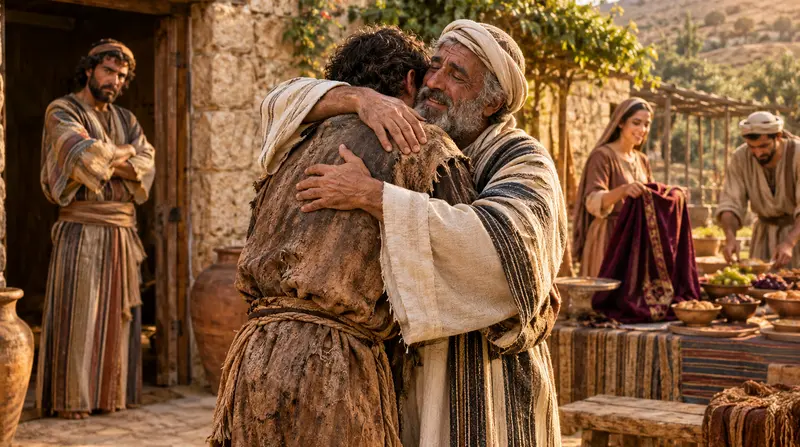
Jesus used parables to communicate through carefully constructed stories. In Luke 15, for example, a father and his two sons form part of a narrative about loss, return, and the response to restoration. Readers can understand the parable’s significance without identifying each figure as a specific historical individual.
The same interpretive care applies to Revelation. Its visions include dragons, beasts, angels, and symbolic figures that require literary and theological interpretation. The book’s setting of conflict and hope is essential for understanding why it uses such imagery.
When a passage does not provide enough evidence to identify a historical person, interpretation should preserve that uncertainty. The most useful question is not always “Who was this person?” but “What role does this figure play in communicating the passage’s message?”
Which Women in the Bible Deserve Special Attention, and How Should Their Stories Be Interpreted?
Women in Scripture appear as matriarchs, leaders, prophets, workers, disciples, mothers, rulers, and members of religious communities. Their stories must be read within the social and political conditions of their settings, without assuming that all women had the same opportunities or faced identical circumstances.
Deborah, Ruth, and Esther: Leadership, Loyalty, and Survival in Different Historical Settings
Deborah appears in Judges 4–5 as a prophet and judge who participates in Israel’s struggle against Sisera. The narrative and accompanying song combine storytelling and poetry, emphasizing Deborah’s leadership and Jael’s role in the conflict’s outcome.
Ruth, a Moabite woman, becomes the central figure in a story shaped by loyalty to Naomi. Her book addresses kinship, survival, marriage, and family integration, eventually connecting Ruth’s descendants with David’s genealogy. That connection contributes to later biblical themes, but Ruth remains the protagonist of a story with its own concerns and literary significance.
Esther occupies a position in the Persian court that enables her to intervene for Jews threatened with destruction. Her story explores identity, risk, power, and the preservation of a community. Because these women live in different settings, their actions should not be turned into one universal formula for leadership.
Sarah, Hagar, Rebekah, and Tamar: Family, Promise, Conflict, and Vulnerability
Sarah, Hagar, and Rebekah appear in Genesis narratives involving promise, descendants, and family conflict. Their stories include rivalry, difficult choices, and unequal power. Hagar deserves particular attention as a character with her own experience of suffering and encounter with God, rather than being treated merely as a secondary figure in Abraham and Sarah’s story.
Tamar appears in more than one biblical narrative. In Genesis 38, her story involves family obligations concerning descendants, Judah’s failure to fulfill his responsibility, and Tamar’s vulnerable social position. In 2 Samuel 13, another woman named Tamar is sexually assaulted by Amnon, an episode that exposes grave failures within the royal family.
These two women should not be confused, and neither account should be used to justify abuse. Careful interpretation identifies the people involved, the relationships of power, and the moral issues presented by the narrative rather than excusing harmful conduct because it appears in Scripture.
Mary, the Mother of Jesus, Mary Magdalene, and Priscilla: Their Roles in New Testament Narratives and Communities
Mary, the mother of Jesus, participates in the birth narratives and appears in other Gospel passages. Mary Magdalene is identified among the disciples and witnesses associated with the final events of Jesus’ ministry. Both are significant figures, but the roles assigned to them in the narratives are distinct.
Priscilla appears alongside Aquila in accounts of Christian activity and teaching. Her presence illustrates the participation of people with different family relationships and responsibilities in the development of early Christian communities. Claims about her role should be grounded in the passages that mention her rather than in assumptions about her undocumented life.
Christian traditions assign different theological significance to Mary, particularly concerning veneration, intercession, and Marian titles. Studying these differences responsibly requires distinguishing what the Gospels narrate from doctrinal conclusions developed in Catholic, Eastern Orthodox, and Protestant communities.
How to Avoid Confusing Modern Assumptions and Later Traditions with What Each Passage Actually Says
The first step is to identify what the text explicitly states. The second is to consider the historical, social, and literary context. The third is to recognize when an interpretation depends on a particular religious tradition or on historical reconstruction that cannot be established from the passage alone.
Modern social categories should not be applied automatically to ancient societies. This does not mean ignoring questions of dignity or justice; it means first understanding how kinship, marriage, inheritance, authority, and survival operated in the world represented by the text.
A responsible interpretation can recognize both women’s importance in biblical narratives and the limits of the available evidence. Where scholarly debates or denominational differences exist, explaining the arguments fairly is more helpful than presenting one interpretation as universally accepted.
How Can We Interpret the Stories of Bible Characters Accurately?
Sound interpretation begins with a central question: what was the text communicating in its original context? Answering it requires attention to the book’s message, its literary genre, the historical setting, and the relationship between individual episodes and the broader biblical narrative.
Identify the Book, Literary Genre, Historical Context, and Original Audience
Begin by locating the passage and identifying the kind of writing it contains. A narrative in Genesis, a psalm, a prophecy in Isaiah, a letter from Paul, and a vision in Revelation do not communicate in exactly the same way. Each genre uses particular literary devices and requires an appropriate reading strategy.
Next, identify the historical situation and original audience wherever the evidence allows. A New Testament letter may address a specific community conflict, while a narrative about Israel’s monarchy must be understood in relation to its political and religious circumstances. The available evidence does not always permit certainty, and responsible interpretation distinguishes established information from scholarly hypotheses.
This process is part of the historical-grammatical method, an approach that considers wording, literary structure, context, and communicative purpose. It helps readers understand a passage before drawing conclusions about its meaning for the present.
Read the Complete Passage and Examine the Character’s Role in the Narrative
Avoid isolating a single verse from the episode in which it appears. Examine how a character is introduced, what the person does, how others respond, and what consequences follow. These details help reveal the character’s literary and theological function.
Meaning may emerge through repetition, contrasts between people, or the outcome of a decision. Reading David’s complete story, for example, prevents the battle with Goliath from becoming an inadequate summary of his character and reign.
The outcome of an episode also matters. The fact that Scripture describes an action does not automatically mean it approves that action. A narrative may record a harmful decision or an injustice precisely because its consequences are important to the story. Interpretation should distinguish description from endorsement.
Consider Hebrew, Aramaic, and Greek Terms When They Affect Meaning, Without Inventing Name Etymologies
The Old Testament was written predominantly in Hebrew, with some portions in Aramaic, while the New Testament was written in Greek. Consulting the original languages can clarify translation differences, wordplay, and significant theological concepts. However, language study is most useful when it addresses a genuine interpretive question rather than serving as a collection of interesting but irrelevant details.
The Hebrew word mashiach means “anointed one” and is associated with someone appointed or consecrated for a role. The Greek word Christos conveys the corresponding concept in the New Testament and gives English the title Christ. This connection helps explain the relationship between Jesus and Jewish messianic expectations, although the meaning of Messiah developed in varied ways within ancient Jewish thought.
The name Jesus is associated with the Greek form Iēsous and Hebrew-Aramaic forms such as Yeshua. Nevertheless, it is not sound interpretation to infer a person’s personality or destiny from a name alone. A character’s significance is determined primarily by the narrative, not by speculative etymologies or unsupported claims about the original languages.
Recognize Human Failures, Ambiguities, and Moral Consequences Rather Than Treating Every Character as a Role Model
Biblical narratives portray people with strengths and weaknesses. Abraham demonstrates trust in God in some episodes while making troubling decisions in others. Peter confesses faith in Jesus and later denies knowing him. David receives a significant role in the biblical narrative, but his actions also produce serious consequences.
This complexity prevents readers from reducing every character to an idealized hero or a one-dimensional villain. Scripture can acknowledge someone’s important role while still recording that person’s failures. The presence of an action in a biblical story does not establish that every aspect of the behavior is morally approved.
For contemporary readers, this requires discernment. Instead of imitating a character automatically, ask how the narrative presents the action, what consequences follow, and how the episode relates to other biblical teachings. Application should arise from interpretation rather than determine it in advance.
Distinguish Textual Evidence, Historical Reconstruction, Theological Interpretation, and Denominational Tradition
These categories are related but distinct. Textual evidence consists of what can be observed directly in a passage. Historical reconstruction uses available sources to investigate people and events. Theological interpretation explains the religious significance of the text. Denominational tradition reflects how particular Christian communities have received and interpreted Scripture.
The statement that Esther is presented as a queen in the Persian court is grounded in the biblical narrative. Details about her undocumented childhood, by contrast, require other evidence or speculation. Similarly, conclusions about how a passage supports a particular doctrine may differ among Christian traditions.
Distinguishing these categories does not undermine faith or prevent theological interpretation. It makes the reasoning behind a conclusion clearer, shows which evidence supports it, and identifies where legitimate disagreement exists. Intellectual honesty requires acknowledging both what the evidence supports and what remains uncertain.
Compare Related Passages Without Erasing Differences Between Biblical Books
Cross-references help readers trace themes across Scripture. David’s history appears primarily in Samuel and Chronicles, but the books select and organize events according to different literary purposes. Comparing them can reveal complementary emphases and differences without assuming that every account must be identical in structure or detail.
The same principle applies to the Gospels. Matthew, Mark, Luke, and John share material but also arrange teachings and events differently. Harmonizing passages can be useful for certain questions, but it should not erase the distinctive perspective of each Gospel writer.
First ask what each passage says on its own terms. Then compare similarities, differences, and possible explanations. This sequence reduces the risk of forcing one text to mean precisely what another means and makes each author’s message easier to recognize.
How to Use Cross-References, Genealogies, and Study Bible Notes
A study Bible can help readers locate characters, understand unfamiliar terms, and identify related passages. Cross-references point to other texts addressing similar topics, while explanatory notes may provide historical or literary context. These tools are aids to interpretation, not replacements for reading the biblical text itself.
Genealogies also deserve careful attention. They establish family relationships, connect figures across generations, and sometimes emphasize the continuity of a particular lineage. However, their purpose is not always to provide a complete family register in the modern sense. Their structure, selections, and omissions must be considered within each book’s context.
The genealogies of Jesus in Matthew 1 and Luke 3, for example, differ in structure and arrangement. Understanding these differences requires attention to each Gospel’s literary aims rather than immediately assuming both intend to present the same sequence in the same way. When studying any genealogy, record the references, consult reliable notes, and verify that conclusions are supported by the passages cited.
Studying biblical figures therefore involves close reading, historical awareness, literary analysis, and theological reflection. Practical application comes after this work: understanding what a passage communicated in its original setting provides a sound foundation for considering its significance for Christian life today.
Frequently Asked Questions About Bible Characters
Who are the main characters in the Bible?
Some of the best-known figures are Adam, Eve, Noah, Abraham, Sarah, Moses, Joshua, Deborah, David, Solomon, Elijah, Daniel, Esther, John the Baptist, Mary, Jesus, Peter, Mary Magdalene, and Paul. They participate in major events and themes throughout the biblical narrative. Their relative importance depends on the book and subject being studied, so there is no single universally accepted ranking of all biblical figures.
How Many Characters Are There in the Bible?
There is no universally accepted count of every character in the Bible. The total depends on how researchers distinguish people who share names, anonymous individuals, symbolic figures, collective groups, and people mentioned only in genealogies. Organizing figures by book, historical period, or narrative role is often more useful than presenting a total without explaining the counting method.
Who Are the Most Important Characters in the Old and New Testaments?
Major Old Testament figures include Abraham, Moses, Joshua, David, Solomon, and the prophets, as well as women such as Sarah, Deborah, Ruth, and Esther. Jesus holds the central place in the New Testament, alongside important figures such as Mary, Peter, John, Mary Magdalene, and Paul. The most useful selection depends on the subject being studied and the role each person plays in Scripture.
Who Are the Most Important Women in the Bible?
Important women include Eve, Sarah, Hagar, Rebekah, Tamar, Deborah, Ruth, Naomi, Esther, Mary the mother of Jesus, Mary Magdalene, Martha of Bethany, and Priscilla. Their stories address creation, covenant promises, leadership, survival, discipleship, and participation in early Christian communities. Understanding each woman requires reading her story in context and distinguishing the biblical account from later interpretations.
What Is the Chronological Order of Bible Characters?
A broad sequence begins with Adam and Eve, continues through Noah and the patriarchs, then moves to Moses and Joshua, the judges, and the kings of Israel. It proceeds through the prophets and figures associated with exile and restoration before reaching the New Testament period of John the Baptist, Jesus, the apostles, and the growth of early Christian communities. This chronology is approximate because many dates remain uncertain and biblical books sometimes organize their material according to literary and theological purposes rather than strict chronological order.
How Can I Study Bible Characters and Find Their Stories in Scripture?
Start by identifying a person’s name and the biblical references where that person appears. Read the complete episode, identify the book’s genre and historical setting, and examine the character’s actions and their consequences. A study Bible, cross-references, and reliable commentaries can help, provided their explanations are checked against the biblical text. This process helps distinguish explicit statements from historical hypotheses and later religious traditions.
Continue your study with How to Study the Bible: A Guide to Accurate Interpretation and Reliable Resources and Meaning of the Name David in the Bible: Hebrew Origin and Biblical Significance. Choose one biblical figure, read the relevant passages in context, and explore how that person’s story contributes to the message of the biblical book in which it appears.