The meaning of the name Benjamin in the Bible is traditionally understood as “son of the right hand.” Yet the biblical story behind this name is more complex than its familiar translation suggests. Benjamin was born during a difficult journey, and his mother, Rachel, named him Ben-Oni before she died. His father, Jacob, then gave him the name by which he became known in the biblical narrative.
This account in Genesis 35 raises important questions about Hebrew naming customs, the symbolism of the right hand, and the relationship between a name’s linguistic meaning and its literary significance. Understanding the passage requires looking beyond popular interpretations to examine what Scripture actually says, what the original Hebrew may indicate, and how Benjamin’s story connects to the history of Israel.
What Is the Meaning of the Name Benjamin in the Bible? Hebrew Origins
The Original Hebrew Form Binyamin and the Elements Ben and Yamin
In Biblical Hebrew, Benjamin’s name appears as Binyamin (בִּנְיָמִין). It is commonly associated with two Hebrew elements: ben (בֵּן), meaning “son,” and yamin (יָמִין), meaning “right hand” or “right side.” Depending on context, the latter word can also be associated with the south.
For this reason, the traditional English rendering is “son of the right hand.” The expression may evoke a position of honor, strength, or favor, but its precise historical origin is not entirely settled. Biblical names sometimes preserve older linguistic forms or associations that cannot be reconstructed with complete certainty.
The biblical narrative itself does not provide a formal linguistic explanation of the name Binyamin. Instead, Genesis 35:18 places the name within the story of Rachel’s death and Jacob’s decision to call his youngest son Benjamin. The narrative context is therefore essential to understanding its significance.
Why Benjamin Is Traditionally Translated as Son of the Right Hand
The right hand carries important symbolic associations throughout the Bible. It can represent strength, effective action, authority, protection, and an honored position. These meanings reflect the physical and social significance of the right hand in the ancient world, where it could be associated with ability, power, and status.
These associations help explain why “son of the right hand” is commonly understood as a name suggesting honor or favor. However, that interpretation should not be confused with a guarantee of wealth, success, or an extraordinary future. A name’s possible symbolism does not establish a fixed destiny for the person who carries it.
In Benjamin’s case, the traditional translation becomes especially interesting because of the circumstances of his birth. His story begins with profound sorrow, yet the name Jacob gives him is associated with the right hand. That contrast encourages careful literary interpretation, even though Genesis does not explicitly explain Jacob’s personal motivation.
Could Benjamin Mean Son of the South? Exploring the Alternative Etymology
Some discussions of the name Benjamin consider an alternative translation: “son of the south.” This proposal draws on the Hebrew word yamin, which can refer to the south as well as the right hand or right side.
The geographical association makes sense in ancient systems of orientation in which people commonly faced east. From that perspective, the right-hand direction was south. A place, family, or tribal designation could therefore preserve a geographical association rather than express only a symbolic idea about honor.
Nevertheless, “son of the south” should be presented as an alternative etymological proposal, not as a definitive translation. The familiar rendering, “son of the right hand,” remains the traditional interpretation. A responsible explanation acknowledges the linguistic possibilities without claiming that the biblical narrative settles every question about the name’s earliest origin.
Why Did Rachel Name Her Son Ben-Oni Before Jacob Called Him Benjamin?
The Context of Genesis 35:16–20: The Journey, Difficult Birth, and Death of Rachel
Genesis 35 recounts significant events in Jacob’s family history as he travels through Canaan. The chapter belongs to the patriarchal narratives of Genesis, which describe the origins of the family from which the people of Israel emerges. Within this larger story, the birth of Benjamin is closely connected to Rachel’s death.
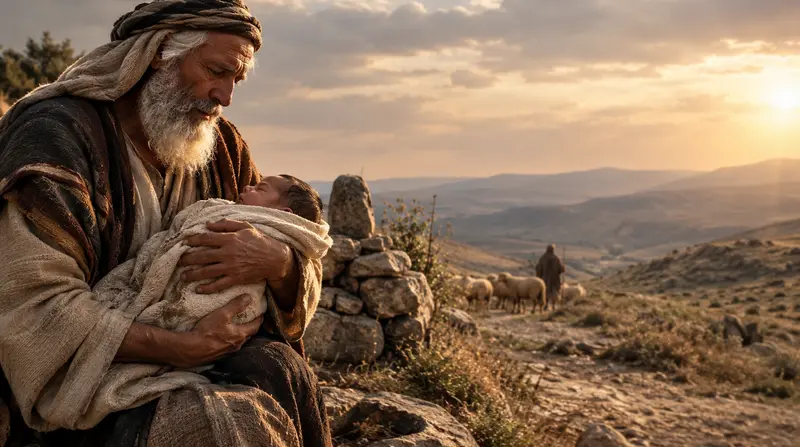
Jacob and his family were traveling from Bethel toward Ephrath, which the text identifies with Bethlehem. During the journey, Rachel went into labor. The birth was difficult, and the midwife encouraged her by telling her that she was having another son.
Rachel died during childbirth. Before her death, she named the child Ben-Oni. Jacob subsequently called him Benjamin. The passage also records Rachel’s burial on the way to Ephrath and the memorial Jacob established at her grave.
This sequence matters because the name appears as part of a narrative about birth, grief, and the continuation of a family. The text preserves both names, allowing readers to see how the same event was associated with different expressions. The account does not, however, provide an extended explanation of either parent’s private thoughts.
Read Genesis 35:16–20 in the King James Version to examine the passage in its biblical context.
What Does Ben-Oni Mean? Son of My Sorrow, Suffering, or Affliction
Rachel’s original name for the child is commonly rendered “son of my sorrow” or “son of my affliction.” The first element, ben, means “son.” The interpretation of the second element, oni, is more nuanced, and translations differ in how they express the idea.
The immediate context strongly associates the name with Rachel’s suffering during childbirth. Her labor is difficult, and she dies after the child is born. The traditional translation therefore captures the grief surrounding the event without requiring the reader to assume that Rachel intended to blame her son for her death.
Rachel’s earlier story adds further context. In Genesis 30:1, she expresses distress because she has not borne children. Later, the birth of her youngest son becomes the occasion of her death. The connection highlights the painful complexity of her story: the desire for a child and the suffering surrounding his birth are brought together in a single narrative.
Some discussions also consider possible lexical connections that produce a different nuance for Ben-Oni. Because the precise derivation is debated, “son of my sorrow” or “son of my affliction” remains the conventional explanation, while alternative interpretations should be identified as possibilities rather than established facts.
Jacob’s Renaming of Benjamin and the Literary Contrast Between Suffering and Honor
Genesis 35:18 explicitly distinguishes between Rachel’s name for the child and the name given by Jacob. Rachel calls him Ben-Oni, while Jacob calls him Benjamin. The contrast between a name associated with suffering and one traditionally associated with the right hand is central to the literary effect of the passage.
One plausible interpretation is that Jacob did not want his son’s identity to remain defined by the circumstances of Rachel’s death. The name Benjamin could express a different association, possibly one of honor or significance. However, Genesis does not record Jacob explaining his decision, so his precise motive cannot be established with certainty.
It is important to avoid going beyond the evidence. The text does not say that Jacob received a new revelation about the child’s destiny, nor does it declare that the name guaranteed divine favor. What it does show is that Jacob replaced the name Rachel had given, and the biblical narrative subsequently uses Benjamin.
What Genesis Explicitly States and What Remains an Interpretation
Careful interpretation distinguishes the details stated directly in the passage from conclusions drawn from them. Genesis explicitly reports Rachel’s difficult labor, the birth, the name Ben-Oni, her death, and Jacob’s choice of the name Benjamin.
The traditional translation of Benjamin is based on Hebrew linguistic analysis. The suggestion that Jacob intended to transform a painful memory into a more hopeful identity is an interpretation of the narrative’s contrast, not an explanation supplied directly by the character.
This distinction is an essential principle of biblical exegesis: understanding a passage means examining its wording, context, and literary structure before drawing theological conclusions. The passage allows readers to recognize the significance of the naming event without turning an attractive interpretation into a certainty the text does not establish.
Who Was Benjamin in the Story of Jacob and Israel?
Benjamin as the Youngest Son of Jacob and Rachel and the Brother of Joseph
Benjamin was the youngest son of Jacob and Rachel and the younger brother of Joseph. His position in the family becomes especially important in the narratives that describe Joseph’s journey to Egypt, his rise to authority, and his eventual reunion with his brothers.
In Genesis 42–45, famine leads Jacob’s sons to travel to Egypt in search of food. Joseph, who had been taken to Egypt years earlier, is now in a position of authority, but his brothers do not recognize him. He recognizes them and asks them to bring Benjamin with them on a subsequent visit.
Jacob initially refuses to send Benjamin on the first journey because he fears losing another son associated with Rachel. This reaction helps explain Benjamin’s emotional importance in the family. His presence is connected not only with Rachel’s death but also with Jacob’s continuing fear of further loss.
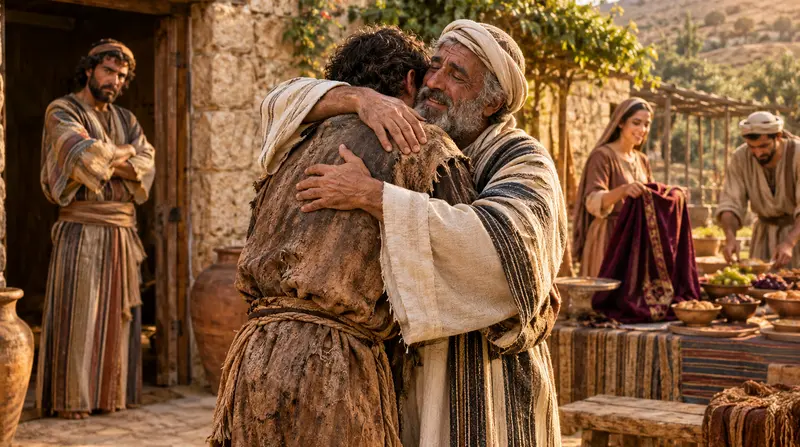
When Benjamin finally arrives in Egypt, Joseph is deeply moved. The subsequent events test whether the brothers have changed since they abandoned Joseph years earlier. Judah’s willingness to offer himself in Benjamin’s place becomes a turning point in the story, opening the way for Joseph to reveal his identity and for the family to move toward reconciliation.
Benjamin is therefore important to the narrative even though he is not its principal speaker or central decision-maker. His presence exposes the brothers’ changed behavior and helps bring the long conflict within Jacob’s family to resolution.
Jacob’s Blessing in Genesis 49:27 and the Formation of Benjamin’s Tribal Identity
Near the end of Genesis, Jacob gathers his sons and speaks about their futures and the peoples associated with them. The blessing over Benjamin in Genesis 49:27 uses the image of a wolf that devours prey and divides the spoil. The poetic language has commonly been associated with the strength or martial character attributed to the tribe descended from Benjamin.
The imagery should not be treated as a literal description of Benjamin’s personality. Genesis 49 presents blessings and sayings concerning the sons of Jacob and their descendants, connecting the patriarchal family story with Israel’s later tribal identity.
Read Genesis 49:27 in the King James Version to see the language used in Jacob’s blessing. Its importance lies in the poetic portrayal of Benjamin and the future associated with his descendants, not in establishing a universal rule about everyone who bears his name.
What Does Son of the Right Hand Mean in the Biblical Context?
The Right Hand as an Image of Strength, Honor, Authority, and Favor
Throughout biblical literature, the right hand can symbolize strength, honor, authority, or protection. The meaning depends on the passage in which the image appears. It would be inaccurate to assume that every reference to the right hand carries precisely the same theological meaning.
In Benjamin’s name, the traditional translation allows these associations to inform the reader’s understanding. Yet an association is not the same as a promise. The name does not state that Benjamin would become wealthy, occupy a superior position among his brothers, or escape future hardship.
Deuteronomy 33:12 provides a relevant later example. In Moses’ blessings over the tribes of Israel, Benjamin is described in terms of the Lord’s love and protection. This passage concerns the tribe as a community and must be interpreted as part of the blessing, rather than used as a dictionary definition of the personal name.
See Deuteronomy 33:12 in the King James Version to examine how the tribe is portrayed in this later biblical passage.
The Difference Between a Name’s Etymological Meaning and Its Symbolic Associations
Etymology examines a word’s origin and formation. Symbolism considers the meanings or associations an expression carries within a particular literary and cultural setting. The two can overlap, but they answer different questions.
The traditional etymology of Benjamin points toward the right hand. Genesis 35 explains the circumstances in which Jacob gives him the name, while later passages show how Benjamin becomes associated with a tribe within Israel. These are related dimensions of the biblical account, but they should not be collapsed into a single claim about destiny.
This distinction helps readers avoid a common mistake when interpreting biblical names. A name may have a meaningful linguistic origin and acquire additional significance through a person’s story, but neither fact automatically establishes a universal spiritual principle.
Why the Name Does Not Automatically Promise Prosperity, a Particular Personality, or a Predetermined Spiritual Destiny
Popular explanations of biblical names sometimes assign personality traits, future success, or special spiritual status to everyone who bears a particular name. The biblical account of Benjamin does not teach that names determine character or guarantee prosperity.
Benjamin’s own narrative takes place amid grief, family conflict, famine, fear, and reconciliation. The traditional meaning of his name does not remove these hardships. Likewise, a blessing directed to the tribe of Benjamin cannot automatically be transferred to every individual who shares the name today.
A responsible Christian application is therefore modest. The name can serve as a reminder of the Bible’s rich naming traditions and the significance of family history, while its interpretation remains grounded in Scripture rather than speculation about a person’s future.
How Do Benjamin and His Tribe Appear Elsewhere in the Bible?
Moses’ Blessing Over Benjamin in Deuteronomy 33:12
In Deuteronomy 33, Moses pronounces blessings over the tribes of Israel. The blessing concerning Benjamin emphasizes the Lord’s relationship with the tribe and uses imagery associated with security and protection.
This passage shows how the name of a patriarch could become the designation for a wider community. Depending on the context, the word Benjamin can refer to Jacob’s son or to the tribe associated with his descendants. Recognizing this distinction prevents the reader from confusing statements about the tribal community with statements about the individual.
The Tribe of Benjamin in Judges 19–21: Violence, Conflict, and Near Destruction
The book of Judges presents a far more troubling account of the tribe. Judges 19–21 recounts a horrific crime at Gibeah, the conflict that follows between the other Israelites and the Benjaminites, and the near destruction of the tribe.
This narrative cannot be reduced to a story of automatic blessing. It depicts violence, social disorder, and devastating consequences. The fact that Benjamin’s descendants receive blessings in other passages does not mean that every action associated with the tribe is approved or that its history is free from judgment.
Read alongside the patriarchal narratives, these chapters demonstrate the complexity of biblical history. A name or tribal identity may connect different generations, but it does not guarantee that those generations will behave in the same way or experience the same circumstances.
Saul and Paul as Biblical Figures From the Tribe of Benjamin
Saul, who becomes Israel’s first king, is identified with the tribe of Benjamin in 1 Samuel 9:1–2. His story includes leadership, conflict, and failure, illustrating that tribal ancestry does not determine a person’s conduct or final standing in the biblical narrative.
Much later, Paul identifies himself as a member of the tribe of Benjamin in Philippians 3:5. In that passage, he lists aspects of his Jewish heritage and religious credentials before explaining why he does not place ultimate confidence in them. His statement demonstrates the continued significance of tribal identity in his own understanding of his background.
Saul and Paul belong to different periods and have very different stories. Their connection with Benjamin shows the tribe’s continuing place in the biblical record, but neither man’s life can be explained simply through the etymology of Benjamin’s name.
What These Later References Add to the Interpretation—and What They Do Not Prove
References to Benjamin’s descendants help connect the birth narrative in Genesis with Israel’s subsequent history. The name moves from a particular family setting into the identity of a tribal community represented in historical narratives, blessings, and later biblical writings.
These texts enrich the historical significance of the name, but they do not demonstrate that a name has independent spiritual power or predetermines an individual’s future. Instead, they show how genealogies, names, and tribal identities help organize the Bible’s account of Israel.
What Is the Most Responsible Biblical Interpretation of the Name Benjamin?
Bringing Together the Hebrew Etymology, Genesis 35, and the Alternative Interpretations
The traditional meaning of Benjamin is “son of the right hand,” based on the Hebrew name Binyamin and its association with ben, “son,” and yamin, “right hand” or “right side.” The alternative “son of the south” remains a possible interpretation of the linguistic elements, but it should not be presented as settled fact.
Genesis 35:16–20 provides the essential narrative context. Rachel names her son Ben-Oni during the painful circumstances surrounding his birth, and Jacob subsequently calls him Benjamin. The contrast between sorrow and the traditional meaning associated with the right hand is significant, although the text does not explain Jacob’s precise motivation.
The later accounts of Joseph, Jacob’s blessing, and the tribe of Benjamin extend the name’s significance beyond the birth story. Each passage contributes something different, and each must be interpreted within its own literary and historical setting.
How to Explain the Name Without Confusing Literal Meaning, Symbolism, and Religious Application
A careful answer to the meaning of the name Benjamin in the Bible begins with the Hebrew terminology, proceeds to the circumstances of Genesis 35, and then considers the symbolic and historical associations found elsewhere in Scripture. This approach keeps the interpretation connected to what the biblical texts actually support.
For families choosing Benjamin today, its biblical origin may provide a meaningful connection with the patriarchal narratives and the history of Israel. Nevertheless, Scripture does not teach that the name guarantees a certain personality, social position, or spiritual destiny.
The central lesson is interpretive rather than predictive: biblical names deserve to be understood within their linguistic, literary, and historical contexts. Benjamin’s name carries a traditional association with the right hand, while his story preserves the grief surrounding Rachel’s death and the continuation of Jacob’s family. Both dimensions belong in a faithful reading of the text.
Frequently Asked Questions
What does the name Benjamin really mean in the Bible?
The meaning of the name Benjamin in the Bible is traditionally “son of the right hand,” based on the Hebrew form Binyamin. In Genesis 35:18, Jacob gives the boy this name after Rachel calls him Ben-Oni during the final moments of her life.
Does Benjamin mean son of the right hand or son of the south?
“Son of the right hand” is the traditional and more widely recognized translation. “Son of the south” is an alternative proposal based on the geographical sense of the Hebrew word yamin. It is a possibility discussed in etymological explanations, not a definitively established meaning.
Why did Rachel name her son Ben-Oni before she died?
Genesis 35:18 associates Ben-Oni with the suffering surrounding Rachel’s childbirth. The name is traditionally translated “son of my sorrow” or “son of my affliction.” The passage records her choice in the face of death but does not say that she cursed the child or blamed him for her suffering.
Why did Jacob change his son’s name from Ben-Oni to Benjamin?
Genesis states that Jacob called his son Benjamin instead of the name Rachel had given him. One plausible interpretation is that Jacob chose a name with a different association from the sorrow surrounding the birth. However, the text does not explicitly explain his motivation, so this interpretation should not be presented as certain.
Was Benjamin really the youngest son of Jacob and the brother of Joseph?
Yes. Benjamin was the youngest son of Jacob and Rachel and the younger brother of Joseph. His role is particularly important in Genesis 42–45, when Joseph asks his brothers to bring Benjamin to Egypt and the family moves toward reconciliation.
Does the name Benjamin mean that a person will receive a special blessing from God?
No biblical passage teaches that everyone named Benjamin automatically receives a special blessing because of the name. Scripture includes blessings concerning Benjamin and his tribe in specific historical and literary contexts, but it does not make the name’s etymology a guarantee of an individual’s future or prosperity.
Continue exploring Scripture with 30 Bible Verses About Children and 30 Bible Verses to Know and Reflect On, two resources for further biblical study and reflection.