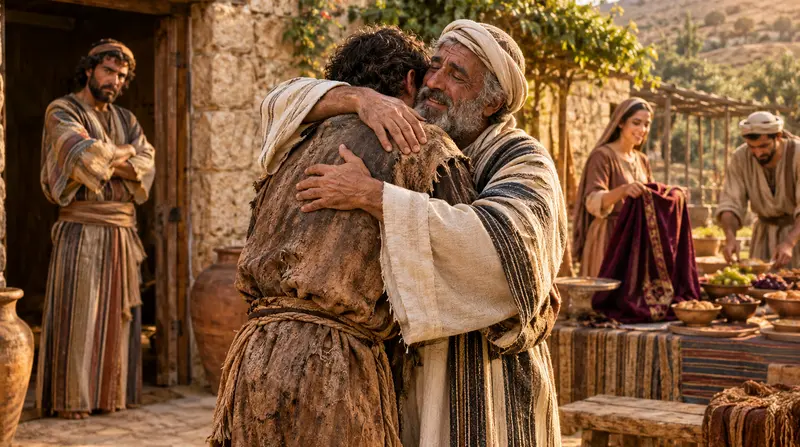

Choosing a name for a baby boy can involve family traditions, personal preferences, and a desire to express faith. Searching for biblical boy names and meanings offers more than a collection of attractive names: it opens a window into ancient family histories, promises, struggles, and expressions of belief preserved in Scripture.
Names such as Daniel, Samuel, Elijah, Joshua, Benjamin, and Immanuel have different linguistic roots and biblical associations. Some incorporate references to God, while others are connected to birth circumstances, family experiences, or particular moments in a biblical narrative. In several cases, the explanation given by the biblical author is not identical to the historical meaning scholars consider most likely.
This guide brings together familiar and uncommon names, their commonly accepted meanings, relevant Bible references, and the historical context needed to understand them responsibly. Whether you are choosing a name for your son or studying biblical characters, you will discover why the original languages and the passages surrounding each name matter more than popular name lists sometimes suggest.
What Did Names Mean in the Biblical World?
The Role of Personal Names in Ancient Israelite Culture
In the biblical world, a personal name identified an individual, distinguished one person from another, and sometimes preserved the memory of a family experience. Names could express gratitude, suffering, hope, or religious conviction. Understanding a name therefore requires more than finding a short English definition; it also involves reading the story in which the name appears.
Genesis provides several examples of this narrative function. Isaac’s name is associated with laughter, Ben-oni recalls Rachel’s suffering during childbirth, and Samuel’s name is connected with Hannah’s prayer for a son. These explanations help readers understand how the biblical narratives connect names to particular events. They do not necessarily define the entire personality or future of the individuals who received them.
Naming practices also varied across historical periods and communities. The biblical writings emerged from different settings over many centuries, so it would be inaccurate to assume that every Israelite family chose names for precisely the same reasons. Some names expressed religious beliefs, others reflected ordinary linguistic traditions, and still others became significant because of how biblical authors used them in their stories.
Biblical onomastics is the study of personal and place names in Scripture. It considers linguistic origins, historical forms, naming practices, and the literary functions of names. This approach helps distinguish what a passage explicitly explains from interpretations that developed later in Jewish or Christian traditions.
How Hebrew Names Incorporated References to God
Many Old Testament names contain elements associated with God. One important element is El, a Semitic word associated with deity and incorporated into names such as Daniel and Gabriel. Other names contain elements connected with YHWH, the four-letter divine name of Israel’s God, often represented by “LORD” in English Bible translations.
Names incorporating a reference to a deity are commonly called theophoric names. Daniel is generally understood as “God is my judge,” Elijah as “my God is YHWH,” and Joshua as “YHWH saves.” Although these names share religious associations, each must be interpreted according to its own linguistic structure rather than through a mechanical rule applied to every Hebrew name.
The original forms also matter. The Hebrew name Yehoshua and its shorter form Yeshua belong to the linguistic background of the Greek form Iēsous, which became “Jesus” in English. Joshua and Jesus are therefore historically related names, although their biblical narratives and theological roles are not interchangeable.
When researching Hebrew boy names from the Bible, readers should distinguish the original language from the English spelling inherited through ancient translations. Transliteration represents a word from one writing system in another alphabet, and several English spellings may refer to related forms of the same name.
When the Biblical Narrative Explains a Name’s Meaning
One of the strongest starting points for interpreting a biblical name is the explanation provided by the text itself. In Genesis 21:3-6, Abraham names his son Isaac in accordance with the promise previously given by God. The name is associated with laughter, a theme that appears in the accounts of Abraham and Sarah reacting to the promise of a child in their old age. The literary connection helps readers understand the name’s role in the story.
Genesis 35:18 offers another revealing example. During a difficult childbirth, Rachel names her son Ben-oni before dying. Jacob subsequently calls the boy Benjamin. The narrative places Rachel’s name within her suffering and contrasts it with Jacob’s choice. The passage is valuable because it explains how the two names function in this family’s story, rather than inviting readers to treat either name as a universal spiritual formula.
You can read the full account in Genesis 35:18 in the King James Version. The surrounding verses provide the necessary context for understanding Rachel’s death, the child’s birth, and the naming decision.
Matthew 1:21 also explicitly connects the name Jesus with his mission to save his people from their sins. In the following verses, Matthew invokes Immanuel, meaning “God with us,” when interpreting the significance of Jesus’ birth. These explanations serve different but related purposes: one emphasizes Jesus’ mission, while the other contributes to Matthew’s theological interpretation of his identity.
The passage can be read in Matthew 1:21-23 in the King James Version. Reading these verses together shows how an evangelist can use a name’s meaning to support the message of a larger narrative.
Why Traditional Name Meanings Do Not Always Establish Historical Etymology
A traditional explanation can be important even when scholars debate a name’s precise historical origin. Biblical authors sometimes connect a name with a similar-sounding Hebrew word to create a meaningful association between the name and the surrounding event. The literary explanation may reveal the author’s purpose without resolving every question about the name’s original formation.
Abraham illustrates the distinction. In Genesis 17:5, God changes Abram’s name to Abraham in connection with the promise that Abraham will become the father of many nations. The narrative explains the change through this promise. However, the historical relationship between the two forms is debated, and the explanation in Genesis should not automatically be treated as a complete linguistic analysis.
Scholarship has examined these practices in detail. Jeffrey L. Cooley’s article “Judean Onomastic Hermeneutics in Context,” published in Harvard Theological Review, discusses how ancient Judean scribes interpreted names. Such passages should not simply be dismissed as inaccurate wordplay: they can reflect deliberate interpretive methods used by biblical writers and readers.
Moses provides another example. Exodus 2:10 connects his name with Pharaoh’s daughter’s action of drawing him out of the water. The explanation involves a Hebrew wordplay associated with the verb mashah, meaning to draw out. An Egyptian origin for the name is also considered plausible by scholars. The narrative’s explanation is clear, but it does not settle every question about the name’s historical origin.
Which biblical boy names and meanings are worth knowing?
Patriarchs and Early Biblical Figures: Adam, Noah, Abraham, Isaac, Jacob, Joseph, and Benjamin
Genesis contains some of the best-known names in the biblical tradition. These figures appear in stories about creation, the flood, covenant, family conflict, and the beginnings of Israel’s history.
- Adam: Related to the Hebrew word adam, meaning human being or man. Genesis 2:7 connects the formation of humanity with the ground, called adamah. The wordplay contributes to the literary relationship between humanity and the earth in the creation account.
- Noah: Traditionally associated with rest or comfort. In Genesis 5:29, Lamech expresses the hope that his son will bring relief from the painful toil associated with the ground.
- Abraham: In Genesis 17:5, the name is connected to God’s promise that Abraham will become the father of many nations. The exact historical etymology should be distinguished from this explanation within the covenant narrative.
- Isaac: Related to a Hebrew verb meaning “to laugh.” The laughter of Abraham and Sarah in the accounts surrounding the promised birth makes this association central to the narrative.
- Jacob: Traditionally connected with “heel” and with wordplay involving the idea of supplanting. Genesis 25:26 and 27:36 develop these associations in the account of Jacob’s birth and his relationship with Esau.
- Joseph: Commonly understood as “may he add” or “may the LORD add.” In Genesis 30:24, Rachel connects the name with her hope that God will give her another son.
- Benjamin: Traditionally interpreted as “son of the right hand,” an expression associated with honor or strength. Genesis 35:18 contrasts the name with Ben-oni, the name Rachel gives the child while suffering. For a closer examination, see Meaning of the Name Benjamin in the Bible: Hebrew Origin and Biblical Significance.
These names do not form a simple catalogue of personal virtues. Their stories include difficult family relationships, mistakes, promises, and consequences. A name may illuminate an episode, but its meaning should not replace a careful reading of the character’s complete narrative.
Leaders, Kings, and Warriors: Moses, Joshua, Gideon, David, Solomon, and Hezekiah
The names of biblical leaders appear in narratives about deliverance, military conflict, government, worship, and the relationship between Israel and God. Their linguistic meanings can enrich these accounts, but they do not determine how each character behaves.
- Moses: Exodus 2:10 connects his name with being drawn out of the water. An Egyptian linguistic origin is also considered possible, so the narrative explanation should not be presented as conclusive proof of the name’s original etymology.
- Joshua: Derived from a Hebrew form generally understood as “YHWH saves.” In Numbers 13:16, Moses gives the name Joshua to Hoshea, connecting the new form with the divine name.
- Gideon: Appears in Judges 6-8 as a leader called to deliver Israel from Midianite oppression. The precise meaning of his name is uncertain, so it is better to emphasize the biblical account than to assign him a definitive etymology.
- David: Traditionally understood as “beloved,” although the historical etymology is not entirely certain. In 1 Samuel 16, David is chosen and anointed by Samuel, and the narrative contrasts God’s choice with judgments based on outward appearance.
- Solomon: Related to the Hebrew root shalom, associated with peace, well-being, and wholeness. In 2 Samuel 12:24-25, his birth is followed by the additional name Jedidiah, which the text associates with the LORD’s love for the child.
- Hezekiah: Generally interpreted as “YHWH strengthens” or “YHWH has strengthened.” His reign is described in 2 Kings 18-20, including religious reforms and the Assyrian threat against Judah.
Scripture does not portray these men as morally identical or consistently exemplary in every action. Moses faces resistance, Gideon expresses hesitation, David commits serious sins, and Solomon’s reign includes both wisdom and significant failures. Their stories demonstrate why a name’s meaning must not be used to erase the complexities of its bearer.
Prophets and Other Old Testament Figures: Samuel, Elijah, Elisha, Isaiah, Jeremiah, Ezekiel, and Daniel
Many prophetic names contain references to God or express religious convictions. Recognizing their linguistic elements can help readers appreciate the themes of the Old Testament without assuming that every name has an explicit theological function.
- Samuel: Traditionally associated with “heard by God” or “asked of God,” although the precise etymology is debated. In 1 Samuel 1:20, his birth is connected with Hannah’s prayer and her request for a child.
- Elijah: Generally understood as “my God is YHWH.” The name expresses a declaration of allegiance that fits the conflict between worship of the LORD and worship of Baal in 1 Kings 17-19.
- Elisha: Commonly interpreted as “God is salvation” or “my God is salvation.” First Kings 19:19-21 describes his call by Elijah, while the following narratives portray his prophetic ministry.
- Isaiah: Traditionally understood as “YHWH is salvation.” The book associated with him addresses judgment, holiness, hope, and restoration, but the name’s meaning does not replace interpretation of its distinct prophetic passages.
- Jeremiah: The precise etymology is debated, with different proposals relating to the LORD’s establishing or exalting. His book is best understood through its historical setting, warnings to Judah, and messages of restoration.
- Ezekiel: Generally interpreted as “God strengthens.” The prophet ministered among Judean exiles in Babylon, and his book addresses Jerusalem’s judgment, communal responsibility, and the hope of restoration.
- Daniel: Means “God is my judge.” Daniel 1:6-7 distinguishes his Hebrew name from the Babylonian name Belteshazzar assigned in the royal court. This detail contributes to the narrative’s treatment of cultural pressure and identity in exile.
These names are not merely decorative religious expressions. Sometimes a name’s meaning reinforces a book’s central message; in other cases, the narrative simply identifies a person without exploring the name’s significance. Responsible interpretation distinguishes between those situations.
Names Associated with Faith and Divine Action: Elijah, Joshua, Immanuel, Gabriel, Daniel, and Nathanael
Readers often seek names that express trust in God, divine protection, or God’s action. Some biblical names contain declarations of faith, while others receive a specific interpretation within a passage.
- Elijah: “My God is YHWH.” The name expresses loyalty to the LORD and fits the prophet’s confrontation with competing forms of worship in Israel.
- Joshua: “YHWH saves.” His name belongs to the narrative of Israel’s leadership after Moses, although the meaning alone does not explain every aspect of his mission.
- Immanuel: “God is with us.” In Isaiah 7:14, the name appears in a sign associated with a political crisis facing Judah. Matthew 1:22-23 later uses the passage to interpret the birth of Jesus. The original historical setting and Matthew’s Christian interpretation are related but distinct contexts.
- Gabriel: Usually interpreted as “God is my strength.” Gabriel appears in Daniel 8:16 and 9:21 and later in Luke 1:19,26 as a messenger in important events associated with the birth narratives.
- Daniel: “God is my judge.” This meaning reflects the name’s linguistic construction, while the book’s account of Daniel establishes his particular role in the story of faithfulness during exile.
- Nathanael: Commonly understood as “God has given” or “gift of God.” In John 1:45-49, Nathanael is introduced to Jesus by Philip.
These names can express a family’s faith, hope, or recognition of God’s authority. However, their religious associations do not mean that saying a name guarantees supernatural protection, success, or a predetermined future. The biblical context, rather than a modern assumption about the power of a name, determines its significance.
New Testament Figures: Jesus, John, Peter, Andrew, James, Matthew, Philip, Thomas, and Timothy
The New Testament reflects the diverse cultural setting of the first century. Judea and Galilee were shaped by Jewish traditions, Aramaic speech, Greek as a widely used language, and Roman political influence. As a result, some biblical names reached English through Greek or Latin even though their roots were Hebrew or Aramaic.
- Jesus: The English name comes through the Greek Iēsous, related to the Hebrew or Aramaic form Yeshua and the longer form Yehoshua. Its traditional sense is “YHWH saves.” In Matthew 1:21, the evangelist explicitly connects the name with Jesus’ mission to save his people from their sins.
- John: Derived from a Hebrew name generally understood as “YHWH has shown favor” or “the LORD is gracious.” John the Baptist prepares the way for Jesus, while John son of Zebedee appears among Jesus’ disciples.
- Peter: The Greek name Petros is associated with a rock or stone. In John 1:42, Jesus connects Simon with the Aramaic designation Cephas, which has a corresponding meaning. This is a narrative renaming, not simply the translation of Simon’s original name.
- Andrew: A Greek name associated with the word for a man or male, often understood in the sense of “manly.” In John 1:40, Andrew is identified as one of the disciples who follows Jesus and later brings his brother Simon to him.
- James: The English name developed through Latin forms related to Jacob. The New Testament contains several individuals named James, so the surrounding passage is essential for identifying the person in question.
- Matthew: Related to a Hebrew name commonly interpreted as “gift of YHWH” or “gift of the LORD.” Matthew 9:9 describes Jesus calling the man while he is sitting at the tax collector’s booth.
- Philip: Derived from the Greek name Philippos, commonly understood as “lover of horses.” Several New Testament figures bear this name.
- Thomas: Related to the Aramaic word te’oma, meaning “twin.” John’s Gospel also uses the Greek designation Didymus, which has the same meaning.
- Timothy: Derived from the Greek Timotheos, often understood as “honoring God.” Acts 16:1 introduces Timothy as a disciple whose mother was Jewish and whose father was Greek.
The names of Jesus’ disciples show that a Greek form does not necessarily indicate a lack of Jewish heritage. Linguistic history explains how names traveled between communities, while the individual biblical narratives establish each person’s identity and role.
Greek and Latin Names in the Bible and Why Not Every Biblical Name Is Hebrew
The Bible includes people from different cultural settings and was composed over many centuries. The Hebrew Bible is predominantly written in Hebrew, with portions in Aramaic, while the New Testament was written in Koine Greek, the common form of Greek used across much of the eastern Mediterranean.
Some biblical names consequently have Greek or Latin origins, while others are adapted forms of Hebrew or Aramaic names. Philip is Greek in origin. Paul comes from the Latin Paulus, traditionally associated with “small,” while Saul derives from a Hebrew name related to the idea of asking or requesting.
Acts 13:9 refers to Saul as also known as Paul. The passage does not describe a divine ceremony in which God changes his name after his conversion. Instead, it introduces the use of Paul’s other name in the context of his mission. The popular claim that Paul acquired this name only after becoming a Christian therefore oversimplifies the biblical account.
Three matters should be kept distinct: a name’s linguistic origin, its form in a particular translation, and the narrative role of the person who bears it. A name of Greek or Latin origin can belong fully to biblical history. Its significance does not depend on being Hebrew.
How Should Biblical Boy Names Be Interpreted?
Names Connected to Birth Circumstances: Isaac, Ben-oni, and Samuel
Some of the clearest explanations of names in Scripture appear in accounts of childbirth. In such passages, the name preserves a parent’s experience or a particular circumstance surrounding the family’s life.
Isaac is associated with laughter. In Genesis 17-18, the promise of a son produces laughter and surprise because Abraham and Sarah are old. In Genesis 21, the birth of Isaac brings the theme of laughter into the celebration of the promise fulfilled. The name thus carries a narrative memory of disbelief, astonishment, and joy.
Ben-oni reflects a very different experience. In Genesis 35:18, Rachel names her son while suffering during childbirth and approaching death. Jacob then chooses Benjamin. The contrast preserves the mother’s distress and the father’s different designation within the same family story. Neither name needs to be turned into a universal spiritual prediction to appreciate the narrative’s meaning.
Samuel’s name is likewise associated with Hannah’s prayer. In 1 Samuel 1, Hannah asks God for a son and dedicates him to the LORD’s service. The narrative explains the naming in connection with her experience, although the exact etymological relationship is debated. This is why translations such as “heard by God” or “asked of God” should be identified as traditional interpretations rather than presented as unquestionable linguistic facts.
In these accounts, names preserve memories. They help readers follow a family’s history, but they do not imply that everyone who receives the same name will have the same experiences.
Names That Express a Declaration of Faith: Elijah, Daniel, and Joshua
Elijah provides a clear example of a name expressing religious allegiance: “My God is YHWH.” In 1 Kings 18, Elijah confronts the prophets of Baal before the people of Israel. The episode challenges divided religious loyalty and emphasizes the question of which deity Israel will acknowledge. The name therefore resonates with the central issue of the narrative.
Daniel means “God is my judge.” His book portrays a Judean living in the Babylonian court, facing pressures to adapt to a foreign cultural and religious environment. Daniel 1:6-7 records the new names assigned to the young men as part of their placement in the royal court. The distinction between their Hebrew names and Babylonian designations contributes to the book’s portrayal of identity, allegiance, and life under imperial rule.
Joshua is commonly understood as “YHWH saves.” In Numbers 13:16, Moses gives Hoshea the name Joshua before the mission of the spies. Later, the Book of Joshua recounts Israel’s entry into the land and the organization of the tribes. The name’s religious element fits the narrative’s wider interest in divine guidance and Israel’s history.
These examples show how names can express the convictions of the community that used them. Nevertheless, each book’s theology must be understood through its overall argument, not merely through the translation of a personal name.
Compound Names and Elements Associated with the Divine Name: Gabriel, Michael, Immanuel, and Others
Names containing references to God occur throughout the biblical period. They may incorporate elements associated with El or YHWH, producing expressions of praise, trust, or a statement about divine action.
- Gabriel: Generally interpreted as “God is my strength,” although the precise analysis of the name’s components can be expressed in different ways.
- Michael: Associated with the question “Who is like God?” The name functions as a declaration that no one compares with the LORD.
- Immanuel: Formed from Hebrew elements expressing “God is with us.” In Isaiah 7, the name is part of a sign in the context of Judah’s political crisis; Matthew later incorporates the passage into his interpretation of Jesus’ birth.
- Eliezer: Commonly interpreted as “my God is help.” The name appears in Genesis 15:2, where Abraham mentions Eliezer of Damascus while discussing the absence of an heir.
- Nathanael: Associated with the idea that God has given something, making “God has given” or “gift of God” common explanations.
The element El does not necessarily communicate an identical complete statement in every name. Similar spellings are not enough to prove that two names have the same structure or meaning. The original word, its linguistic components, and its historical setting must all be considered.
A name can also carry literary significance without requiring its bearer to embody the meaning perfectly. Scripture portrays real people with complex histories and choices. Its teaching does not depend on a magical or deterministic interpretation of personal names.
Name Changes and Narrative Transformation: Abram and Abraham, Jacob and Israel, Simon and Peter
Some biblical name changes mark a new responsibility, a covenant promise, or a change in how a character is presented. However, the details and purposes of these changes differ from one narrative to another.
In Genesis 17:5, Abram becomes Abraham in the context of God’s covenant and the promise that he will become the father of many nations. The text explicitly connects the new name with the promise. A careful interpretation respects this narrative connection while acknowledging that the precise historical etymology of the two forms remains debated.
Jacob receives the name Israel in Genesis 32:28 after his nighttime struggle. The narrative associates the change with his encounter and struggle with God and people, within the larger story of his return and his relationship with Esau. Israel later becomes the name associated with Jacob’s descendants as a people. The individual’s name and the collective designation are related, but their uses must be distinguished.
Simon and Peter represent a different situation. John 1:42 presents Cephas, rendered Peter in Greek, as a designation given by Jesus to Simon. The naming contributes to the disciple’s narrative identity, but it is not precisely the same type of covenantal renaming found in the story of Abraham.
It would therefore be misleading to claim that all biblical name changes represent the same kind of spiritual transformation. Each passage creates its own relationship between the name, the character, the promise, and the historical situation.
The Difference Between Etymology, Narrative Explanation, and Theological Interpretation
Three levels of analysis should remain distinct when readers investigate a biblical name.
Etymology studies a word’s historical origin and formation. It examines linguistic elements, older forms, related languages, and changes over time. Some names have relatively clear etymologies; others remain uncertain or admit competing proposals.
Narrative explanation is the connection a biblical author establishes between a name and an event. Moses illustrates this distinction: Exodus 2:10 associates his name with being drawn out of the water, even though a possible Egyptian origin is also considered in historical research.
Theological interpretation examines how a name contributes to the religious meaning of a passage or book. In Matthew 1:21, the name Jesus is connected with saving his people from their sins. That explanation supports Matthew’s presentation of Jesus’ mission, but it does not exhaust the book’s broader teaching about his identity.
These distinctions prevent two common mistakes. The first is dismissing a biblical author’s explanation whenever it differs from a modern etymological proposal. The second is treating every popular association as a proven linguistic definition. Responsible interpretation considers the evidence at each level without confusing them.
Which Biblical Boy Names Have Meanings Associated with Specific Themes?
Names Associated with Love, Laughter, and Rest: David, Isaac, and Noah
David is traditionally interpreted as “beloved,” although some caution is appropriate when discussing the historical development of the name. Scripture does not present this meaning as a promise of a conflict-free life. In 1 Samuel 16, David is chosen and anointed as king, while the later narratives recount both his achievements and serious moral failures.
Isaac is associated with laughter, as the account of his birth makes clear. The laughter of Abraham and Sarah begins with their surprise at the promise of a child and is revisited after Isaac’s birth. The name consequently preserves a memory of a particular family experience rather than simply describing a personality trait.
Noah is traditionally connected with rest or comfort. In Genesis 5:29, Lamech expresses hope that the child will bring relief from the painful toil associated with the ground. The subsequent flood narrative introduces themes of judgment and the preservation of life. Lamech’s expectation should not be confused with a complete definition of Noah’s entire story.
For families comparing popular biblical boy names, these three offer familiar examples with distinct associations. Their meanings should still be presented precisely: beloved, laughter, and rest are not interchangeable concepts, and they do not communicate the same theological message.
Names Associated with Justice, Salvation, and God’s Presence: Daniel, Joshua, and Immanuel
Daniel, Joshua, and Immanuel are often chosen for their religious significance. Their traditional interpretations relate respectively to God’s judgment, salvation, and God’s presence with his people.
Daniel is generally translated as “God is my judge.” This linguistic meaning does not guarantee that every person with the name will be just or experience favorable outcomes. The Book of Daniel emphasizes God’s sovereignty, faithfulness under exile, and the tensions between God’s people and imperial powers.
Joshua means “YHWH saves.” The name belongs to the successor of Moses and is part of the same linguistic tradition related to the name Jesus. This relationship helps explain the wordplay in Matthew 1:21, but it does not make the histories of Joshua and Jesus identical. Each figure has a distinct role in the biblical narrative.
Immanuel means “God is with us.” In Isaiah 7, it appears in a sign associated with King Ahaz and a political threat to Judah. Matthew later applies the passage to his account of Jesus’ birth. The relationship between the texts is important for Christian interpretation, but it requires attention to both the original historical setting and Matthew’s later use of the passage.
Names Associated with Gifts, Blessings, and Divine Provision: Nathanael, Matthew, and Joseph
Those searching for biblical names that mean gift from God may consider Nathanael and Matthew, while recognizing that their linguistic forms are different. Nathanael is generally understood as “God has given” or “gift of God.” Matthew is related to a Hebrew name commonly interpreted as “gift of YHWH” or “gift of the LORD.”
Joseph, by contrast, is associated with the idea of adding. In Genesis 30:22-24, the narrative connects Rachel’s naming of Joseph with her hope that God will give her another son. This context links the name with her experience of divine provision, but it does not make Joseph a direct linguistic equivalent of “gift from God.”
The distinction matters when assembling biblical names for a family that wishes to express gratitude, faith, or hope. A name may refer to a gift, a prayer, or divine action in different ways. Linguistic precision prevents these related ideas from being treated as though they all had exactly the same meaning.
Less Common Names in Biblical Narratives and Genealogies: Obadiah, Micah, Othniel, Eliezer, and Zerubbabel
The biblical narratives and genealogies offer options beyond the most familiar names. Some have relatively clear meanings, while others have uncertain etymologies that deserve careful qualification.
- Obadiah: Generally interpreted as “servant of YHWH” or “worshiper of the LORD.” The name belongs to several biblical figures, including the prophet associated with a book containing oracles against Edom.
- Micah: Related to the question “Who is like YHWH?” The name and related forms occur in different biblical contexts, so the passage must be checked before identifying a particular person.
- Othniel: Appears in Judges 3:7-11 as a deliverer of Israel. The precise interpretation of his name is uncertain, and proposals about its components should not be presented as definitive without supporting linguistic evidence.
- Eliezer: Commonly interpreted as “my God is help.” In Genesis 15:2, Abraham mentions Eliezer of Damascus while discussing the fact that he has no heir.
- Zerubbabel: An important figure in texts connected with the return from exile and the rebuilding of the temple. The name’s precise origin and meaning are debated; his biblical importance is more securely established by his role in Ezra, Haggai, and related passages.
Uncommon names can widen the possibilities for families looking beyond popular choices, but rarity and etymological certainty are separate matters. A name may be unusual because it comes from a less familiar biblical genealogy, while its historical meaning remains uncertain. The most responsible approach is to evaluate each name on its own evidence.
How Can You Choose and Understand a Biblical Boy Name Without Misrepresenting Its Meaning?
Check the Biblical Passage and the Context in Which the Name Appears
The first step is to identify the person in Scripture. Searching for a name without its reference may produce several individuals, genealogical entries, or people in different books. Reading the complete passage helps establish who the person is, the historical setting, and the character’s role in the narrative.
When researching biblical boy names and meanings, record three basic details: the name, its probable linguistic meaning, and the biblical passage where it appears. If the text itself explains the name, distinguish that explanation from a modern historical-linguistic proposal.
For example, a study of Benjamin should include Genesis 35:16-20 rather than relying on a list containing only a short definition. The passage recounts his birth, Rachel’s death, and the contrast between Ben-oni and Benjamin. That context provides information that a two- or three-word gloss cannot convey.
Distinguish Probable Original Meanings from Popular Modern Interpretations
The next step is to determine whether a proposed meaning is supported by the original language. Popular name lists sometimes combine simplified translations, devotional associations, and definitions that fail to distinguish historical etymology from a biblical author’s narrative explanation.
Words such as “strong,” “blessed,” “chosen,” and “warrior of God” may serve as symbolic descriptions in particular contexts, but they should not automatically be assigned to every religious name. Establishing the meaning of a Hebrew or Greek name requires examining its components and comparing their linguistic use.
When a name’s meaning is disputed, a reliable explanation identifies the principal proposals and indicates the degree of certainty. This does not weaken biblical study. It makes the difference between textual evidence, historical-linguistic hypotheses, and interpretive tradition more transparent.
Understand English Variants and Differences Between Hebrew, Aramaic, and Greek
Biblical names reached English through several linguistic routes. Some forms came through Latin, others through Greek, and many reflect Hebrew or Aramaic originals. The spelling used today is therefore not always identical to the form used by the earliest bearers of the name.
Jesus and Joshua illustrate this process because their English forms descend from historically related names. Peter and Cephas demonstrate a similar relationship between Greek and Aramaic: the forms communicate a related meaning, but they belong to different languages.
When consulting a name list, check whether the source identifies the original language, explains the transliteration, and provides a biblical reference. These details help distinguish related forms from genuinely different names and prevent superficial spelling similarities from being mistaken for established etymological relationships.
Why a Name’s Meaning Does Not Automatically Determine Character or Destiny
A name may preserve a family’s memory, communicate hope, or express religious conviction. Scripture does not teach that someone automatically becomes just, wise, protected, or successful by receiving a name associated with those qualities.
David, traditionally associated with “beloved,” provides a useful example. His biblical story includes important achievements but also serious moral failures and their consequences. Joshua’s name is related to divine salvation, yet his mission belongs to a particular historical narrative rather than a formula that applies identically to everyone who bears the name.
For Christians, choosing a name with religious significance can express faith or honor a biblical figure. The choice, however, does not replace moral responsibility, character formation, or understanding the teachings of Scripture. This distinction preserves the symbolic value of names without assigning them a power that the biblical text does not claim.
Ultimately, the best way to use biblical boy names and meanings is to combine careful attention to language with a reading of the passages in which the names appear. Some meanings are relatively clear, others remain disputed, and many have significance that depends on their narrative setting. Understanding these differences makes it possible to appreciate the names’ historical and spiritual associations without turning them into automatic predictions about a person’s future.
Frequently Asked Questions
What are some popular biblical boy names and their meanings?
Popular choices include Daniel, traditionally interpreted as “God is my judge”; Samuel, associated with Hannah’s prayer for a son; Joshua, related to “YHWH saves”; and Immanuel, meaning “God is with us.” David is traditionally associated with “beloved,” while Benjamin is commonly interpreted as “son of the right hand.” The attractiveness of a name is personal, so it is worth checking its linguistic origin and biblical context before making a decision.
Which biblical boy name means gift from God?
Matthew and Nathanael are two options associated with the idea of a divine gift. Matthew is related to a Hebrew name commonly interpreted as “gift of YHWH,” while Nathanael generally means “God has given” or “gift of God.” Their meanings are similar but their linguistic forms differ. Matthew appears among Jesus’ disciples in Matthew 9:9, while Nathanael is introduced in John 1:45-49.
What are some rare or uncommon biblical boy names?
Obadiah, Micah, Othniel, Eliezer, and Zerubbabel are less familiar choices in many modern name lists. Obadiah is generally interpreted as “servant of YHWH,” and Eliezer as “my God is help.” Micah is associated with the question “Who is like YHWH?” The precise etymologies of Othniel and Zerubbabel are less certain, so their historical meanings should be presented cautiously. Checking each character’s biblical context will also help distinguish the name’s linguistic meaning from the person’s role in Scripture.
Which biblical name means God is my judge?
Daniel is traditionally interpreted as “God is my judge.” The Book of Daniel portrays a Judean living under Babylonian rule and facing cultural and religious pressures. Daniel 1:6-7 distinguishes his Hebrew name from the Babylonian name Belteshazzar assigned in the royal court. This detail contributes to the narrative’s treatment of identity and faithfulness under foreign rule.
Which biblical boy names come from Hebrew?
Examples include Adam, Noah, Abraham, Isaac, Jacob, Joseph, Benjamin, Moses, Joshua, Samuel, Elijah, Isaiah, Daniel, and Immanuel. Many contain elements associated with God or preserve memories of events described in the Old Testament. In the New Testament, names such as Jesus and John also have Hebrew roots, although they reached English through Greek and Latin forms. A name’s linguistic origin is therefore not determined solely by the book in which it appears.
Does every name in the Bible have a spiritual meaning?
No. Some names contain clear religious elements, and some biblical narratives explicitly explain why a person received a particular name. Others are ordinary personal names whose exact origins are uncertain or that appear only in genealogies. Even when a name carries religious meaning, it does not automatically determine its bearer’s character or destiny. Responsible interpretation considers the original language, the historical context, and the name’s function in the passage, distinguishing what Scripture actually says from later associations.
Continue exploring Scripture with How to Study the Bible: A Guide to Accurate Interpretation and Reliable Resources and Meaning of the Name Benjamin in the Bible: Hebrew Origin and Biblical Significance. These resources offer further guidance on interpreting biblical texts carefully and understanding the historical and linguistic background of an individual biblical name.